 EN
EN

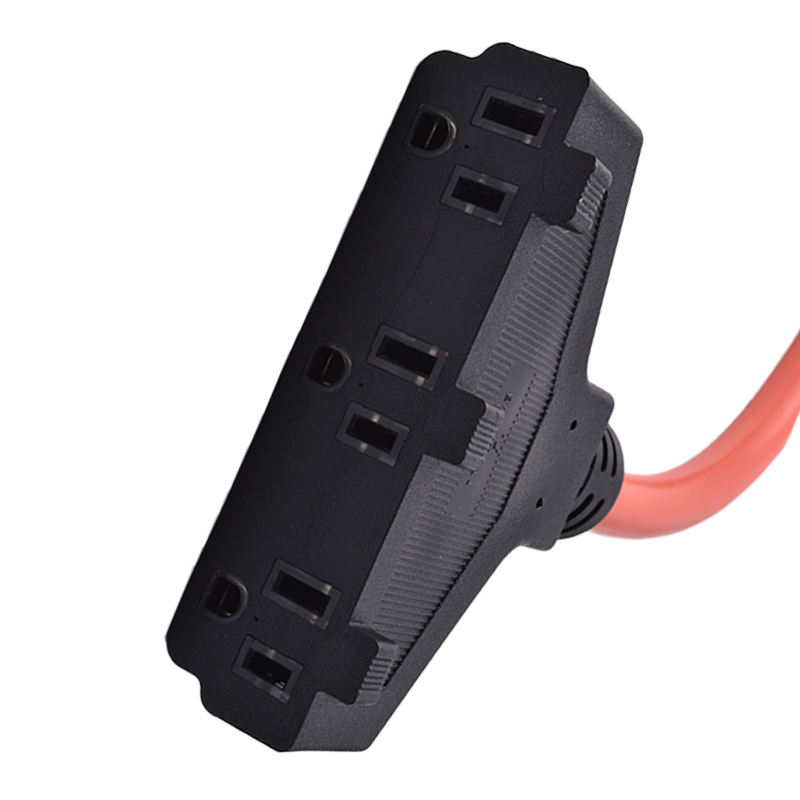
The 120‑Meter Solution That Saved $12,000 Per Maintenance Event
An offshore wind farm operator faced a recurring problem. Their maintenance teams needed to power diagnostic tools inside the nacelle—200 feet above the deck—but standard 50‑meter and 100‑meter extension cables never reached. Daisy‑chaining two 100‑foot cables created a tangle of connectors, introduced voltage drop, and violated site safety protocols. The operator requested a single 120‑meter, 16 AWG extension cable engineered specifically for the application. The custom cable, built with a salt‑spray‑resistant TPE jacket and validated to maintain <3% voltage drop under 10A load, eliminated the need for temporary generators. Setup time dropped by 40%, and each maintenance event saved an estimated $12,000 in lost productivity. The cable has been in service for over three years with zero failures.
This outcome is not unusual. Over the past six years, industrial power distribution consultants have observed that custom‑engineered extension cables consistently outperform standard off‑the‑shelf solutions in demanding applications—where exact length, proper gauge, and regulatory compliance are non‑negotiable. Understanding custom extension cable capabilities isn't just about length flexibility; it is about matching conductor size, connector type, and jacket material to the specific electrical load, environmental exposure, and safety requirements of your operation.
Standard vs. True Custom – The Length Flexibility Gap
Standard extension cable reels are typically stocked in preset lengths—25, 50, or 100 feet—that serve general‑purpose needs. While convenient for quick procurement, these fixed lengths often force excessive slack or require dangerous daisy‑chaining on site. True custom extension cable production goes beyond trimming a roll; it involves engineering the entire assembly to the exact meter required by the workspace.
| Feature | Standard Extension Cable | Custom Extension Cable |
|---|---|---|
| Length options | Fixed (25, 50, 100 ft) | Any length (0.3m to 100m+) |
| Connector orientation | Fixed | Customizable to application |
| Jacket color | Standard | Brand or safety‑coded |
| Labeling | Generic | Serialized, application‑specific |
| Compliance | Batch‑tested | Individually validated |
| Field modification | Often required | None needed |
A leading manufacturer can fabricate a 33‑foot run for a mezzanine power drop, a 78‑foot cord for a conveyor line, or a 12‑inch pigtail for a control panel—all with the same serialized traceability as standard products. This approach eliminates coiled excess that becomes a trip hazard and removes the need for field‑spliced joints that compromise insulation integrity. Customization also covers connector orientation, jacket color, and labeling so the cable fits its environment without modification.
Length Limits – Minimum and Maximum Feasible Runs
The practical length window for a custom extension cable is bounded by physical handling and electrical performance.
| Length Category | Feasible Range | Key Constraint |
|---|---|---|
| Short runs (pigtails) | 0.3m – 1m | Connector strain, crimp reliability |
| Standard runs | 1m – 30m | General‑purpose applications |
| Extended runs | 30m – 100m | Voltage drop becomes significant |
| Long‑distance runs | 100m – 300m+ | Requires upsized gauge, special jacket |
On the short end, assemblies as little as 0.3m are common for linking adjacent equipment or creating a service loop inside an enclosure. Below that, mechanical strain on connectors and crimp reliability make shorter runs impractical. At the upper limit, maximum safe length is dictated by voltage drop and circuit ampacity. For a 16 AWG cord carrying 10A, a 120m run may be acceptable for low‑duty maintenance tools—but the same gauge on a 15A heater would be restricted to roughly 30m to maintain ≤3% voltage drop at the receptacle. For lengths beyond 100m, manufacturers often specify upsized wire gauges or higher‑temperature‑rated insulation to preserve safety margins.
Technical and Regulatory Limits – Voltage Drop, Wire Gauge, and Certification
Voltage Drop – The Primary Constraint
Voltage drop is the primary technical constraint on custom extension cable length. As current flows through a conductor, resistance causes voltage loss proportional to length and inversely related to cross‑sectional area. The National Electrical Code (NEC) recommends limiting branch‑circuit voltage drop to 3%, directly constraining how far a given gauge can carry a load.
| Wire Gauge (AWG) | Max Length for 10A Load (≤3% drop at 120V) | Max Length for 15A Load (≤3% drop at 120V) |
|---|---|---|
| 18 AWG | ~25 ft | Not recommended |
| 16 AWG | ~50 ft | ~30 ft |
| 14 AWG | ~80 ft | ~50 ft |
| 12 AWG | ~120 ft | ~80 ft |
| 10 AWG | ~200 ft | ~120 ft |
Certification and Compliance
Every custom extension cable must be validated against relevant standards. The manufacturer calculates voltage drop, selects appropriate conductor size, and confirms full compliance before approval.
| Standard | Scope | Key Requirement |
|---|---|---|
| NEC Article 400 | Flexible cords in the US | Ampacity, voltage drop, temperature rating |
| IEC 60245 | Rubber‑insulated flexible cables (international) | Insulation, jacket, environmental resistance |
| UL 62 | Flexible cords and cables | Safety, temperature rise, mechanical durability |
| CCC / GB/T 5013.4 | China compulsory certification | Equivalent to IEC 60245 |
| AS/NZS 3199 | Australian flexible cords | Length limits for 1.0mm² conductors |
The Manufacturer's Compliance Process
When a customer requests a non‑standard extension cable length, the manufacturer begins by mapping operating current and distance to NEC Article 400 and, where applicable, IEC 60245. Design starts with selecting a wire gauge from NEC Table 400.5(A) that guarantees ampacity is never exceeded, then calculates loop voltage drop using the conductor's resistance per unit length. The drop is held below the 3% branch‑circuit recommendation; if exceeded, the gauge is increased or load rating adjusted. For international projects, the same process follows GB/T 5013.4 or equivalent IEC requirements. After assembly, every custom extension cable undergoes dielectric testing, insulation‑resistance measurement, and strain‑relief verification. Final products carry required certification marks (UL, CCC, etc.) and include documentation confirming regulatory compliance.
Industrial Applications – Where Custom Cables Make the Difference
Custom‑length extension cables solve unique power delivery challenges in demanding environments where standard lengths fall short.
| Industry | Application | Custom Requirement |
|---|---|---|
| Offshore wind | Nacelle tool power (120m run) | 16 AWG, TPE jacket, salt‑spray resistant |
| Manufacturing | Conveyor line power drops | Exact length, armored jacket |
| Data centers | Rack PDU connections | Pigtails, color‑coded, labeled |
| Construction | Temporary site power | Heavy‑duty, weather‑resistant |
| Mining | Equipment power in tunnels | Crush‑resistant, flame‑retardant |
Case Study – Offshore Wind Turbine Maintenance
A leading offshore wind farm operator required a reliable power source for maintenance tools at the nacelle of a turbine located far from the nearest service platform. Standard 50m or 100m cables were insufficient, and daisy‑chaining multiple units violated safety protocols while introducing unacceptable voltage drop. A single 120m, 16 AWG extension cable was custom‑engineered to span the distance while maintaining voltage drop below 3% under a 10A load. Its TPE jacket provided high resistance to salt spray, UV radiation, and oil exposure—and passed 10,000 flex cycles under conditions simulating North Sea winter storms. The custom cable eliminated the need for temporary generators on the nacelle, reducing setup time by 40% and preventing an estimated $12,000 in lost productivity per maintenance event. By precisely matching length and gauge to the application, the solution upheld IEC 60309 safety standards and demonstrated how bespoke cable design improves operational efficiency in harsh offshore environments.
Manufacturing Quality – The Tiantai Advantage
Achieving the consistent electrical performance, mechanical durability, and regulatory compliance that make custom extension cables a trusted solution in demanding industries requires not only the right design but also rigorous manufacturing control. Tiantai's expertise in precision cable engineering—including conductor sizing, insulation selection, and connector termination—supports the production of high‑quality custom extension cables for industrial, renewable energy, and infrastructure applications. By applying controlled manufacturing protocols, validated testing procedures, and consistent quality assurance, Tiantai ensures that every custom cable delivers reliable performance in the field—backed by full documentation and certification support.
FAQ
| Question | Answer |
|---|---|
| What is the difference between standard and custom extension cables? | Standard cables come in fixed lengths (25, 50, 100 ft). Custom cables are engineered to exact length, gauge, connector type, and jacket material for your specific application. |
| What is the shortest feasible custom cable length? | Approximately 0.3m (1ft) for pigtails or service loops; shorter runs risk connector strain and crimp failure. |
| What is the maximum safe length for a custom extension cable? | Depends on wire gauge and load. For 10A at 120V, 16 AWG is limited to ~50ft for ≤3% drop; upsizing to 12 AWG extends to ~120ft. |
| What standards apply to custom extension cables? | NEC Article 400 (US), IEC 60245, UL 62, CCC/GB/T 5013.4 (China), and AS/NZS 3199 (Australia) depending on destination. |
| Why does voltage drop matter in long extension cables? | Excessive voltage drop reduces tool performance, increases current draw, and can cause overheating or equipment damage. |
| How does Tiantai ensure regulatory compliance? | Each cable is designed to applicable standards, validated through dielectric and insulation testing, and carries required certification marks (UL, CCC, etc.). |