 EN
EN

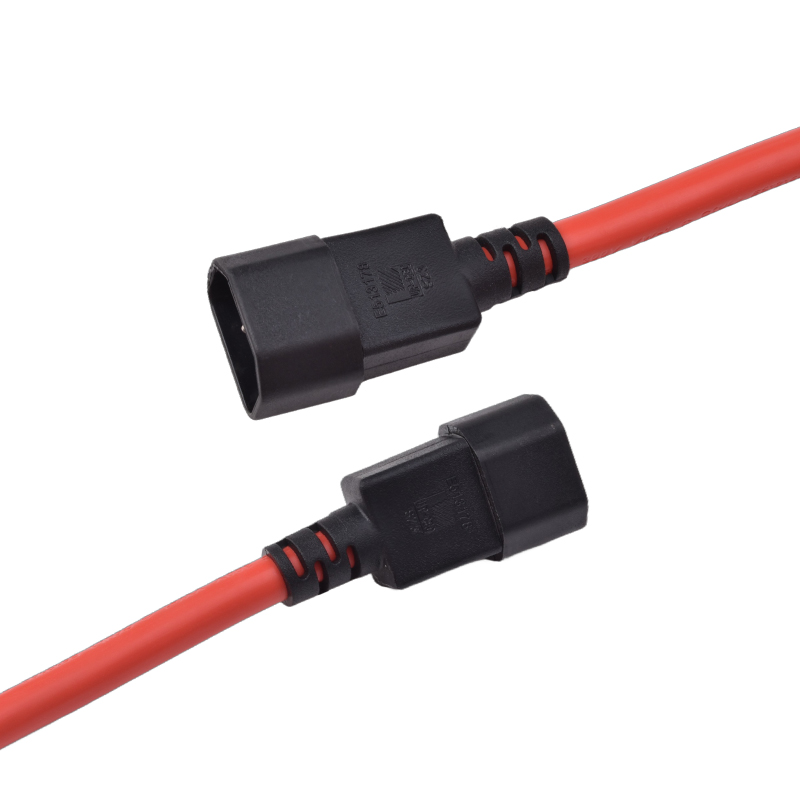
Material Construction and Weather Resistance of Tiantai Extension Cords
The jacket material of an extension cord directly determines its safety boundaries across indoor and outdoor environments. Two primary compounds dominate the market: PVC (Polyvinyl Chloride) and rubber-based elastomers—each delivering distinct performance under thermal and environmental stress.
PVC vs. Rubber Jacketing: Thermal Stability, UV Resistance, and Real-World Durability
PVC jackets are cost-effective and provide adequate insulation in controlled indoor settings. However, their thermoplastic structure stiffens markedly below freezing; standard PVC cords become brittle and prone to cracking near –20°C, risking conductor exposure. In contrast, rubber elastomer jackets—identified by the “E” in ratings like SJEOOW—retain flexibility down to –50°F, making them far more reliable for winter outdoor use.
UV exposure further differentiates these materials. Standard PVC degrades through photo-oxidation when exposed to sunlight, leading to surface chalking, flaking, and eventual jacket rupture. While premium outdoor-rated PVC formulations include UV stabilizers, blended or reinforced elastomer jackets offer superior long-term resistance to both high-temperature deformation and multi-season ultraviolet radiation—critical for dual-environment reliability.
IP Rating Verification and Moisture Protection Performance in Outdoor Environments
Beyond material choice, the Ingress Protection (IP) rating provides a standardized benchmark for environmental resilience. For outdoor use, the second digit—which indicates liquid ingress protection—is decisive. An IP44 rating confirms resistance to water splashes from any direction, suitable for light rain. An IP65 rating goes further: it certifies full dust-tightness and protection against low-pressure water jets, making it appropriate for demanding outdoor applications.
Genuine weather-resistant cords incorporate sealed receptacle covers and reinforced plug connections to prevent moisture entry at critical junctions. Without verified IP certification—validated through independent testing—claims of outdoor suitability lack objective substantiation. A non-certified cord may function initially but is highly susceptible to internal copper corrosion under sustained humidity or wet conditions, increasing the risk of ground faults and premature failure. For dual-environment use, verifying at least IP44 compliance ensures internal wiring remains reliably isolated from environmental moisture.
Electrical Safety Certification for Dual-Environment Extension Cord Use
UL 817 Compliance Requirements for Indoor/Outdoor Extension Cords
Extension cords marketed for both indoor and outdoor use must meet stringent safety benchmarks to mitigate electrical hazards. In North America, UL 817—maintained by Underwriters Laboratories—is the foundational standard governing these products. Outdoor-rated cords must feature jacketed construction and clearly distinguishable markings that set them apart from indoor-only variants.
Per the U.S. Consumer Product Safety Commission’s final rule (80 FR 44262, July 2015), outdoor extension cords must exhibit five readily observable characteristics outlined in UL 817–2014—including heavy-duty jacketing, weather-resistant plugs, strain relief, proper grounding configuration, and durable insulation. Missing even one renders the product a substantial safety hazard. The standard also evaluates resistance to moisture ingress, temperature extremes, and mechanical abuse—ensuring safe operation across diverse real-world conditions. Unlike indoor cords, which may rely on thinner insulation, dual-environment cords must balance flexibility with robust protection—verified exclusively through third-party testing. This compliance is mandatory for legal distribution in the U.S. and Canada.
Tiantai’s Certification Status: CE Marking Limitations vs. North American Standards
Tiantai extension cords commonly carry the CE (Conformité Européenne) marking, indicating conformity with European Union safety directives. However, CE marking alone does not fulfill North American certification requirements. European standards differ significantly in voltage tolerances, plug configurations, and test protocols—meaning a CE-marked cord may lack flame-retardant housing, integrated fusing, or grounding layouts mandated by UL, ETL (Intertek), or CSA.
Without a recognized North American safety listing, regulators and insurers may deem the product uncertified for dual-environment use. Such gaps can void warranties, elevate liability exposure, and compromise connected equipment safety. For instance, a cord passing EU moisture-resistance tests might still fail UL 817’s immersion protocol due to differences in test duration or water pressure. Buyers using Tiantai cords in North America must therefore confirm the presence of a supplementary UL, ETL, or CSA listing to ensure compliance with local safety requirements for indoor and outdoor applications.
Real-World Performance and Longevity of Tiantai Extension Cords
Field Data: 12-Month Outdoor Exposure in High-Humidity Guangdong Conditions
A 12-month field study conducted in Guangdong, China—a region with year-round relative humidity exceeding 80%—demonstrated how jacket material governs longevity under persistent moisture stress. A PVC-jacketed cord from a major domestic manufacturer developed visible surface cracking and suffered a 15% decline in insulation resistance after one year of continuous outdoor exposure. By comparison, a heavy-duty rubber-jacketed cord retained full dielectric integrity with no measurable degradation. This highlights a key insight: in high-humidity climates, material selection—not just build quality—is the dominant factor in preventing insulation failure.
Flex Life and Abrasion Resistance: Indoor Handling vs. Outdoor Mechanical Stress
Mechanical demands vary sharply between indoor and outdoor use. Indoors, cords undergo repeated bending and coiling—testing flex life primarily through cyclical motion. Outdoors, however, they face abrasive contact with rough surfaces like concrete, asphalt, and gravel. A standard thermoplastic jacket may survive thousands of indoor flex cycles but can sustain jacket breaches after only a few dozen drags across abrasive terrain—exposing live conductors and creating immediate shock or short-circuit hazards. Because failure modes shift from internal fatigue to external jacket damage outdoors, comparing overall “lifespan” across environments is misleading. For safe dual-use applications, abrasion resistance and jacket toughness must be prioritized alongside electrical specifications.
FAQ
What is the difference between PVC and rubber jacketing for extension cords?
PVC jacketing is cost-effective and suitable for indoor use, but it stiffens in cold temperatures and degrades under UV exposure. Rubber jacketing is more flexible, even at extreme temperatures, and offers better UV resistance, making it ideal for outdoor use.
What is the importance of IP ratings in extension cords?
IP ratings determine the cord’s ability to resist environmental factors like moisture and dust. For outdoor use, a rating of at least IP44 or higher ensures adequate protection against water splashes and other weather conditions.
Why is UL 817 compliance important for extension cords?
UL 817 compliance ensures safety across temperature extremes, moisture resistance, and mechanical stress, making the cord suitable for dual-environment use. It’s mandatory for legal distribution in North America.
Are Tiantai extension cords certified for use in North America?
No, Tiantai cords often carry CE markings, which align with European standards but do not meet North American requirements like UL, ETL, or CSA certifications.