 EN
EN

Why Voltage Drop is the Biggest Limiting Factor for the Length of an Extension Cord
How Voltage Drop Works With Distance in Extension Cords
When current flows through an extension cord and encounters resistance due to the length of the cord, there is something happening called “voltage drop.” There are two primary reasons for the physical resistance in the extension cord:
The longer the extension cord, the more electron flow there are, and with that, greater resistance.
Wires that are described with a higher AWG number are thinner and up the resistance of the wire.
When dealing with voltage, current, and resistance, you are dealing with the essence of Ohm’s Law. For example, a 100 foot long 14 gauge extension cord operating at 15 amps on a standard household 120 volt circuit will lose approximately 6 volts on the circuit. A voltage drop of that size will create operational issues, such as flickering lights and even cause motors to stop running, as evidenced by the most recent data surrounding electric standards. And this is not a theoretical phenomenon. Electricians constantly observe this in the real world when tools become sluggish or fail to operate at all.
The 3% Voltage Drop Guidelines and Effect on Tool Use
To ensure safe and reliable operation of tools and durability of tools, electrical codes (including NEC 2023) set a maximum of 3% voltage drop (3.6V on 120V circuits) on branch circuits. Performance and safety issues are affected by voltage drop and wrap operational temperature and duration:
If voltage drop is below 3%, tools will run without any loss in efficiency.
If voltage drop is above 3%, the windings of the motor will overheat, there will be a loss of torque, and the motor will shut off due to internal protection circuits. These (operational) efficiency drops are as much as 15% (IEEE B-23 Standard).
Take the example of a circular saw pulling 12A over 150 feet of extension cord. When using 16 AWG the voltage would likely fall below 110V, and the thermal cut-off will activate and stop you from using the saw. Keeping within the code voltage drop gives you safety, consistent power delivery, and optimal operational duration while using your tools.Understanding Wire Gauge (AWG) and Its Relationship to Safe Lengths for Electric Extension Cords
12/14/16 AWG Electric Extension Cords: Comparison by Lengths
The American Wire Gauge (AWG) system explains how current travels through a wire and how far it can go before the voltage drop causes it to lose the ability to power devices. It may seem confusing, but lower AWG numbers correspond to larger wire diameters. These larger wires provide less resistance to the electrical flow. The wire gauge will affect how much current a wire can safely carry before overheating, and how long a distance the current can travel while still being useful. These two factors will determine which wire an electrician will choose for an installation.
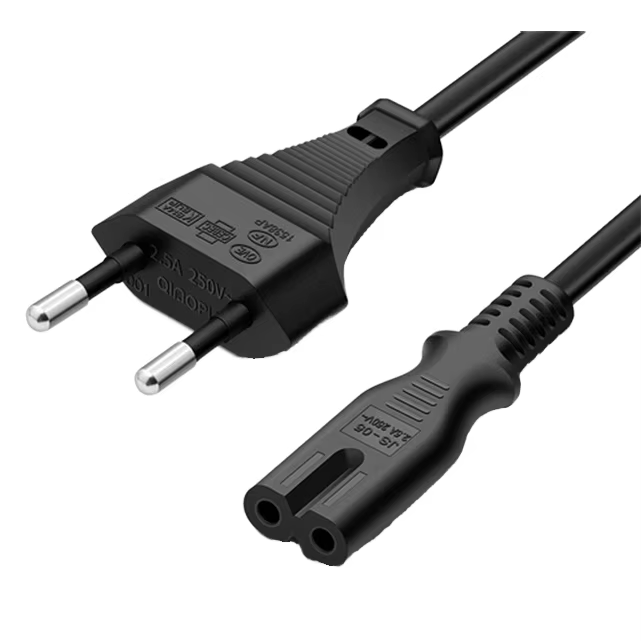
For cables longer than 50 ft, it is recommended to use a lower gauge wire. 14 AWG wire allows for 50% more usable power than 16 AWG wire. If you are using equipment that uses more than 15 amps (such as a table saw or a compressor) and you need more than 25 ft of cable, you need to use 12 AWG wire. 16 AWG wire is suitable for a maximum of 10 ft when used for lighting or charging. Many industry tests show that using thinner wires than recommended produces problems in overheating, regardless of the amount of current that the wire is designed for.
Type of Load and Duty Cycle: How Amperage and Usage Patterns Affect Real-Life Length of Electric Extension Cords
Derating for Continuous and Intermittent Loads: Why A 10A Tool Might Need A Shorter Electric Extension Cord
There are many factors that are taken into consideration when determining how long of an extension cord you can safely use and one of these factors is the amperage rating of the cord. The other factor that needs to be taken into consideration is the duration of operation of the tool. When using an extension cord for tool operations, there are running continuous operations that can be done with large space heaters or large industrial air compressors do continuous operations for 3+ hours, and these types of tools produce heat and there is heat that is produced inside the extension cord. Therefore, because there is a heat being produced, there is a faster degradation of the insulating around the wires as well as an increase of electrical resistance over time. On the other hand, tools that are not continuous such as standard drills and sanders may not run the heat of the cord is lower because the cord is more likely to cool naturally.
With 10A continuous, operational load, the effective capacity is de-rated 15-20%, which means when comparing the loads performed intermittently, the same weight will require a shorter cord, or have a larger gauge than the previous.
Safety consideration beyond performance: puts stress on insulation, overheating, and compliance with UL regulations for running long electrical cords:
Voltage drops on electrical cables, and using the proper wire gauge for performance is important, but everything should start with safety. 80% of the rated current run for an extended period of time puts a lot of stress on the insulation. From a safety standpoint, cords that are used for extended periods of time in warm or confined areas pose an increased fire risk of approximately 37% in 2023. A major safety hazard is if cables are coiled or if rugs are placed over cables because these trap heat and stress the insulation.
What happens next? The insulation deteriorates at a faster rate and the entire thing becomes less useful at stopping electricity from leaking through which in technical terms we call compromised dielectric strength.
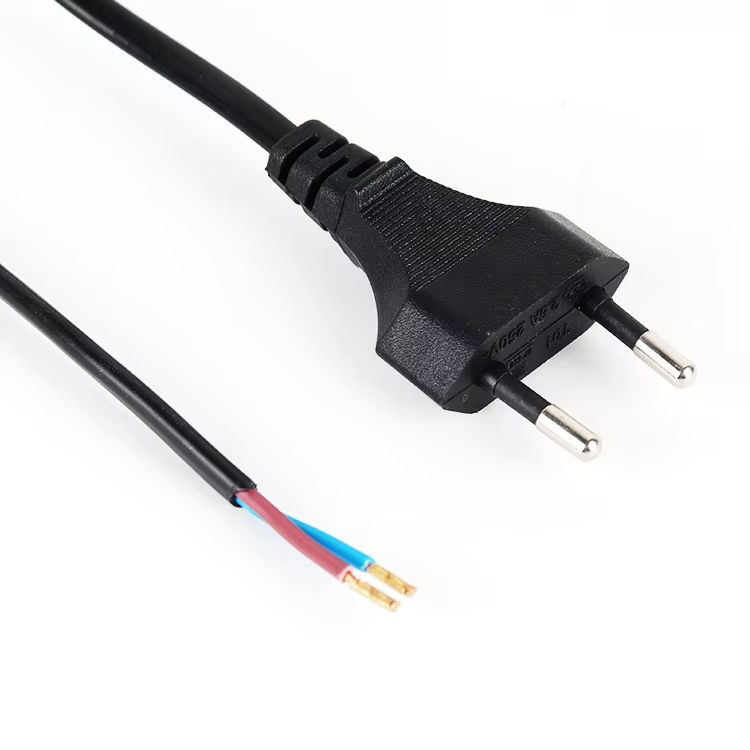
When it comes to safety, independent certification actually means something. The UL 2556 test evaluates cable performance of heat, flame, and mechanical resistance under real world use. Things like constant flexing, thermal cycling, and surge/current impacts. A 100 foot cord that has a UL listing is not just a longer cord than the rest. It is purposely designed to withstand a more demanding workload while maintaining the safety features that are built into the cable. When it comes to installations that will remain in place for a long period of time, especially those that will be outside or in a workshop that gets a lot of activity, choose cords that are UL, CSA, or ETL approved. Marketing claims aren’t made for fun. It means that someone has done the work of proving the product is safe. This means that real safety features are built into the cables and they are not a source of hazards that could cause accidents.
FAQ
What causes voltage drop in an electric extension cord?
As the length of the cord increases, so does the resistance within the wires, causing a loss of voltage.
Why is the 3% rule important?
To protect tools from overheating, loss of efficiency, and to prevent shortening the tools lifespan.
How does wire gauge affect cord length?
A smaller wire gauge (thicker wire) supports longer cord lengths and higher loads while keeping voltage steady.
What is derating in terms of extension cords?
Derating requires shorter cords and/or larger wire gauges to mitigate the increased thermal stress of continuous use.
Why should electric extension cords be UL listed?
To simplify safety concerns around overheating, shorting, and fires. UL listed cords are proven to pass safety testing.