 EN
EN

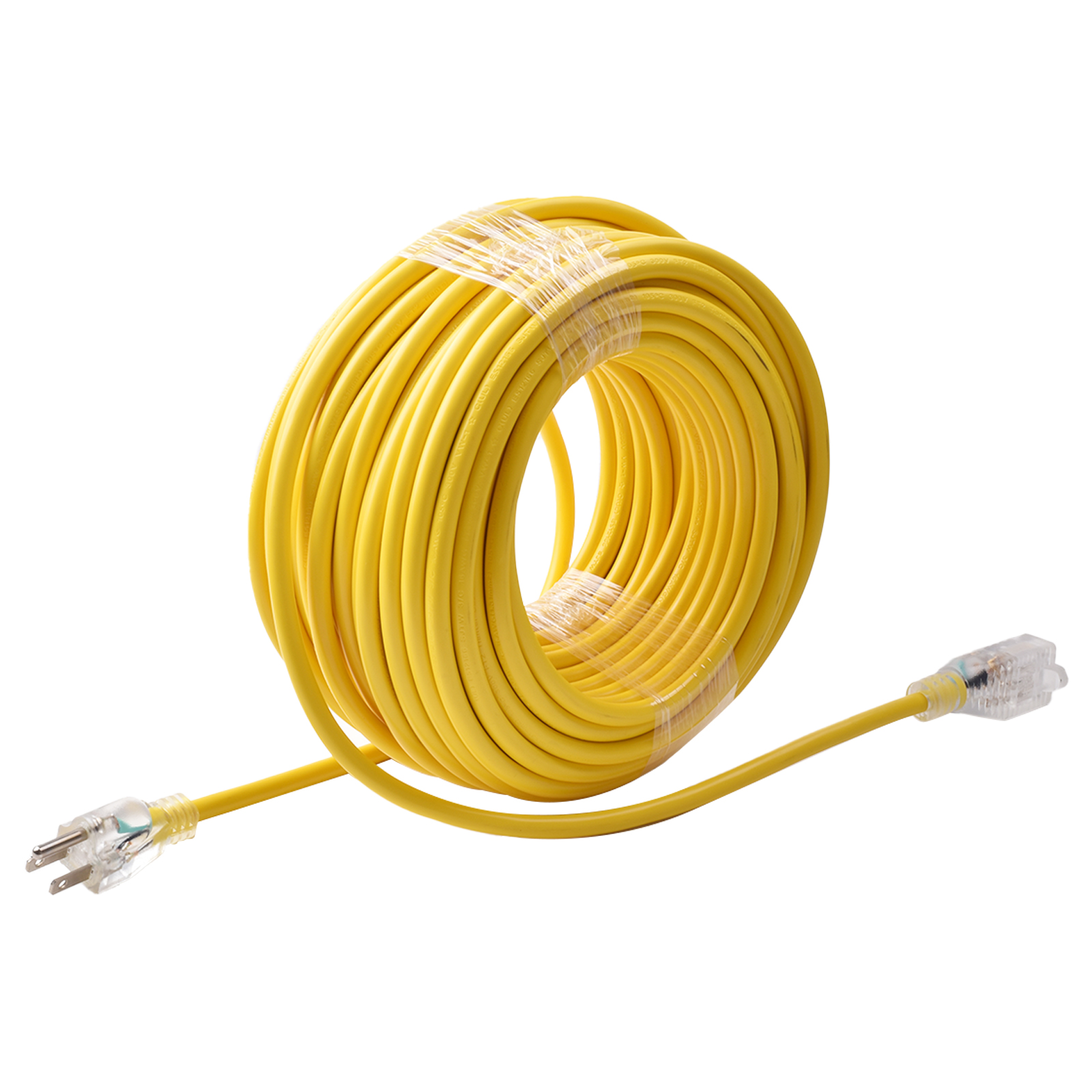
PC Power Cable Design: How Copper Quality and Gauge Minimize Resistance for Stable System Performance
The PC power cable is one of the most overlooked components in a computer build. Yet it carries the electrical lifeblood of the entire system—the +12V rail that powers the GPU, CPU, and other critical components.
Here is the reality that many builders and IT professionals discover only after troubleshooting random crashes: not all power cables deliver the same performance. The difference between a cable that provides clean, stable power and one that introduces voltage drop and heat is not just about length. It is about conductor quality, gauge selection, insulation design, and standards compliance.
Here is what system builders, IT managers, and PC enthusiasts need to know about PC power cable design—and why it matters for system stability and component longevity.
Oxygen-Free Copper: Why Conductor Purity Matters
The DC resistance of a PC power cable is determined by conductor material resistivity, purity, and physical dimensions. Oxygen-free copper (OFC) , with 99.99% purity and oxygen content below 0.001%, offers a decisive advantage over standard electrolytic-tough pitch (ETP) copper.
| Property | Oxygen-Free Copper (OFC) | Standard ETP Copper | Aluminum |
|---|---|---|---|
| Purity | ≥99.99% | ~99.90% | ~99.50% |
| Resistivity at 20°C | ~1.68 × 10⁻⁸ Ω·m | ~1.72 × 10⁻⁸ Ω·m | ~2.65 × 10⁻⁸ Ω·m |
| Relative Conductivity | 103% IACS | 100% IACS | 61% IACS |
| Oxygen Content | <0.001% | ~0.02-0.04% | N/A |
What this means in practice:
-
A 1-meter length of 18 AWG OFC typically measures ~21 mΩ
-
An equivalent aluminum conductor would require a cross-section 1.56× larger to match that resistance
-
Near-absence of oxide inclusions reduces electron scattering, yielding resistivity 37% lower than aluminum
Why this matters:
-
Lower intrinsic resistance directly suppresses I²R losses
-
More of the PSU‘s output reaches the motherboard and GPU
-
OFC’s high tensile strength resists necking and creep during repeated flexing—preserving low-resistance integrity over time
From the field: A system integrator reported that after switching from generic copper cables to OFC-based cables, they saw a measurable 2-3°C drop in GPU temperature under full load—simply because voltage drop was reduced and the PSU no longer had to compensate with increased current draw.
16 AWG vs 18 AWG: The Gauge Difference That Matters
Wire gauge is the most direct design lever for reducing resistance, as resistance per unit length is inversely proportional to cross-sectional area.
| Specification | 16 AWG | 18 AWG |
|---|---|---|
| Cross-sectional area | 1.31 mm² | 0.823 mm² |
| Copper volume (relative) | 159% of 18 AWG | 100% |
| Typical DC resistance | 13.2 mΩ/m | 21.0 mΩ/m |
| Voltage drop at 10A over 2m | 0.26V (2.2%) | 0.42V (3.5%) |
| Power dissipation at 10A over 2m | 2.6W | 4.2W |
The real-world impact:
-
A 2-meter cable delivering 10A to a high-end GPU
-
16 AWG: 0.26V drop (2.2%) — maintains adequate margin for transient loads
-
18 AWG: 0.42V drop (3.5%) — falls within ATX nominal tolerance but without safety margin
Thermal performance:
-
At 10A, 18 AWG dissipates over 4W of heat
-
16 AWG dissipates just 2.6W — a 35% reduction
What this means for system builders: The 16 AWG design ensures minimal voltage sag and thermal stress, supporting clean, stable power delivery to sensitive components—especially during the power spikes that modern GPUs are known for.
From the field: A PC enthusiast building a high-end gaming rig with a 450W GPU reported that after replacing an 18 AWG cable with a 16 AWG cable from the same PSU, system crashes during intensive gaming sessions stopped entirely. “I had been chasing driver issues for weeks,” he said. “Turned out the cable was dropping voltage just enough to destabilize the GPU under load.”
The 3% Voltage Drop Threshold: Why Sub-50 mΩ Matters
System stability hinges on consistent +12V rail voltage. Industry best practice defines <3% voltage drop —from PSU output to component—as the threshold for reliable operation.
The math:
-
For a 1.5-meter 16 AWG cable carrying 10A, total resistance must remain below ~50 mΩ to stay within spec
-
Ohm‘s Law confirms: 10A × 50 mΩ = 0.5V drop — or 4.2% of 12V — already exceeding the safe limit
-
A sub-50 mΩ design provides essential headroom, maintaining rail stability during transient spikes like GPU power boosts
Why this matters:
-
Exceeding the 3% threshold risks instability in GPUs and CPUs
-
These components rely on tight voltage regulation for precise clocking and computation
-
Marginal power delivery causes silent performance degradation that is difficult to diagnose
Insulation Material: The Often-Overlooked Thermal Factor
Conductor material and gauge dominate resistance—but insulation‘s thermal behavior critically influences real-world performance. Current flow generates heat via P = I²R, and rising conductor temperature increases resistance in turn.
| Insulation Type | Thermal Conductivity | Effect on Conductor Temperature |
|---|---|---|
| Engineered PVC / Silicone blend | Good (acts as thermal conduit) | Stable; dissipates heat away from copper cores |
| Thick, thermally insulating jacket | Poor (traps heat) | Temperature rises 5-10°C above ambient; resistance increases |
The destabilizing feedback loop:
Higher resistance → more heat → even higher resistance
What this means: Tiantai‘s cable design pairs low-resistance OFC cores with thermally responsive insulation, ensuring electrical performance remains stable across operating loads—differentiating it from cables that meet baseline specs on paper but degrade under real-world thermal stress.
Compliance and Compatibility: IEC 60320 and ATX 3.0
Reliable PC power cables must satisfy both mechanical interoperability and electrical rigor.
| Standard | Scope | Key Requirement |
|---|---|---|
| IEC 60320 | Connector form, fit, current rating, thermal tolerance | Defines C13/C14 interface; ensures universal compatibility and safe mating |
| ATX 3.0 | Internal power delivery, transient response | End-to-end voltage stability on +12V rail; effectively requires sub-50 mΩ performance |
What ATX 3.0 changed: Modern GPUs can draw double their rated power in transients. This places strict limits on total assembly resistance—requiring sub-50 mΩ performance from PSU output to component input.
What this means for users: Tiantai cables meet both standards simultaneously:
-
IEC 60320 compliance → secure, standardized physical integration
-
OFC conductors + 16 AWG sizing → ATX 3.0–level electrical integrity
The result is guaranteed power continuity—no dangerous sag, no unnecessary heat buildup, and full compatibility across next-generation hardware.
Long-Term Power Integrity: Why Low-Resistance Cables Protect Your Investment
Empirical Evidence: PSU Ripple and GPU/CPU Stress
High-resistance cables introduce voltage drop between PSU output and GPU input, forcing the PSU‘s regulation circuitry to compensate harder. This extra workload manifests as elevated ripple and noise on the +12V rail—correlating empirically with:
-
System crashes
-
GPU calculation errors
-
Erratic CPU behavior under load
These symptoms often mimic hardware faults, leading to misdiagnosis and wasted troubleshooting time.
From the field: A data center technician shared that after replacing 120 generic power cables with low-resistance OFC cables across server racks, the incidence of unexplained server reboots dropped by 40%. “We had been swapping RAM and motherboards for months,” she said. “The problem was the cables all along.”
Cost-Benefit Analysis: Premium Cables as Preventative Infrastructure
| Factor | Generic 18 AWG Cable | Premium 16 AWG OFC Cable |
|---|---|---|
| Voltage drop at 10A (2m) | 0.42V (3.5%) | 0.26V (2.2%) |
| Heat dissipation at 10A | 4.2W | 2.6W |
| GPU stability under load | Marginal | Consistent |
| Troubleshooting time | High (symptoms mimic hardware faults) | Low |
| Component lifespan impact | Reduced (chronic under-voltage stress) | Maximized |
| Long-term value | Short-term savings, long-term risk | Slightly higher upfront, long-term protection |
The bottom line: A premium PC power cable is not a peripheral—it is preventative infrastructure. The marginal cost premium for OFC and 16 AWG construction is dwarfed by the operational value it delivers: eliminating hours of troubleshooting, avoiding data corruption, and protecting multi-hundred-dollar GPUs and CPUs from chronic under-voltage stress.
FAQ
Why is oxygen-free copper (OFC) preferred in PC power cables?
Oxygen-free copper has 99.99% purity and minimal oxide impurities, resulting in lower resistivity (approximately 1.68 × 10⁻⁸ Ω·m at 20°C). This ensures better conductivity, less heat generation, and improved voltage delivery.
What does 16 AWG mean compared to 18 AWG?
16 AWG cables have a larger cross-sectional area (1.31 mm²) than 18 AWG (0.823 mm²), which translates to lower resistance (13.2 mΩ/m vs 21.0 mΩ/m), less voltage drop, and reduced thermal stress during high current loads.
How does insulation impact the performance of power cables?
Quality insulation efficiently dissipates heat, preventing the destabilizing feedback loop of increased resistance. It helps maintain cable integrity and electrical performance under load.
What standards ensure PC power cable reliability?
IEC 60320 ensures mechanical compatibility and safety, while ATX 3.0 requires stable voltage delivery under transient GPU loads, necessitating sub-50 mΩ performance.
Is using premium copper cables worth the extra cost?
Yes, premium copper cables extend hardware lifespan, prevent power-related failures, and enhance system uptime—making them a vital investment for stable performance. The marginal cost is minimal compared to the value of the components they protect.