 EN
EN

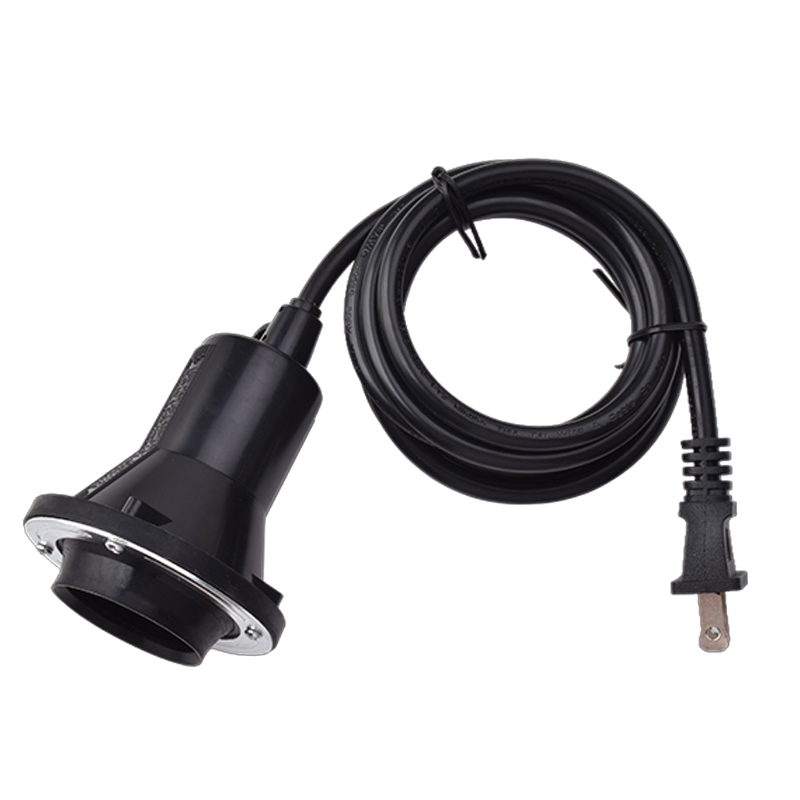
Unmatched Electrical Performance for Stable Industrial Power Cables
High Dielectric Strength and Insulation Resistance Under Continuous Load
Dielectric strength—the maximum electric field insulation can withstand without breakdown—is critical for industrial power cables operating 24/7. Sustained voltage stress demands insulation that resists leakage currents, which compromise safety, efficiency, and system stability. Cross-linked polyethylene (XLPE) delivers dielectric strength exceeding 20 kV/mm—more than double that of standard PVC—making it the benchmark material for continuous-load applications like motor drives and substation feeders. Independent testing confirms XLPE-insulated cables retain 99% of initial insulation resistance after 10,000 hours at rated voltage, a key indicator of long-term reliability. This integrity also mitigates moisture ingress and thermal aging—two leading causes of premature failure. In production-critical environments, such performance directly prevents voltage dips, unplanned shutdowns, and costly repairs.
Low Dielectric Loss Ensuring Energy Efficiency in 24/7 Operations
Dielectric loss—the energy converted to heat within insulation under AC voltage—may seem negligible per meter, but accumulates significantly across miles of cable in round-the-clock operations. Low-loss XLPE formulations achieve dissipation factors as low as 0.0003, drastically reducing thermal buildup and wasted energy. A documented upgrade at a continuous-process chemical plant cut cable-related energy losses by 12%, yielding measurable reductions in operating costs and cooling demand. This efficiency is especially vital in high-amperage applications like metal smelting or large VFD installations, where excess heat accelerates insulation degradation. By minimizing thermal stress on both conductor and insulation, low-dielectric-loss designs extend service life and reduce maintenance frequency—delivering both economic and operational advantages for facilities with zero tolerance for downtime.
Thermal Resilience: Power Cables Built for Extreme Industrial Heat
200°C+ Rating and Stability in Smelting, Furnace, and VFD Environments
Industrial environments like electric arc furnaces, smelting lines, and VFD-driven motors routinely expose cables to ambient temperatures above 250°C and rapid thermal cycling. Standard thermoplastics fail under these conditions; only specialized materials—including silicone rubber, PTFE, fiberglass, and mineral-insulated (MI) constructions—maintain dielectric integrity at 200°C and beyond. MI cables, featuring a stainless steel sheath and magnesium oxide insulation, are rated for continuous operation at 1,000°C per NEC 2023—a specification validated through rigorous third-party testing. Their metallic sheath not only provides exceptional thermal stability but also blocks oxygen diffusion, preventing conductor oxidation and insulation embrittlement. This dual protection ensures uninterrupted power delivery in the most thermally aggressive settings, where even momentary insulation failure risks catastrophic process interruption.
Sustained Overload Capacity and Extended Service Life Under Thermal Stress
Thermal resilience extends beyond peak temperature ratings—it includes the ability to handle sustained overloads without irreversible degradation. High-temperature cables use conductors with high-temperature alloys and insulation systems engineered to resist thermal softening, creep, and loss of mechanical strength. Advanced thermal conductivity in both conductor stranding and insulation layers enables more uniform heat dissipation, eliminating localized hotspots that trigger early aging. Field data from heavy manufacturing plants shows properly specified high-temperature cables last 2–3 times longer than standard alternatives in furnace zones—even under constant thermal stress. Slower rates of thermal aging translate to fewer insulation cracks, reduced conductor fatigue, and predictable maintenance intervals. For 24/7 operations, this durability means fewer emergency shutdowns and greater confidence in long-term asset planning.
Mechanical & Environmental Toughness in Demanding Industrial Settings
Abrasion, Impact, and Chemical Resistance for Petrochemical and Heavy Manufacturing
In petrochemical, mining, and heavy manufacturing facilities, power cables endure relentless physical abuse: dragging across gravel and steel, impact from dropped tools, and repeated exposure to oils, solvents, acids, and caustic cleaners. Failure here isn’t just electrical—it’s mechanical. Leading industrial cables integrate cross-linked polyethylene (XLPE) insulation, galvanized steel wire armoring, and thermoplastic elastomer (TPE) or chlorosulfonated polyethylene (CSPE) jackets—each selected for verified resistance to abrasion, cutting, impact, and chemical attack. These features ensure reliable performance on conveyor systems, crushing stations, and mobile process equipment, where cable movement and environmental exposure are unavoidable. Specifying cables with third-party-tested mechanical and chemical resilience isn’t an option—it’s the foundation for minimizing unplanned outages and avoiding recurring replacement costs in the harshest real-world conditions.
Safety-Certified Power Cables for Hazardous Industrial Zones
UL, IEEE, and IEC Compliance with Flame-Retardant, LSHF Construction
In hazardous locations—such as refineries, chemical processing units, and grain handling facilities—cable safety is non-negotiable. Flammable gases, vapors, or combustible dust require power cables certified to stringent fire-performance standards. UL 1072 and UL 1581 verify flame-retardant insulation and jacketing that inhibit flame propagation; IEEE 1202 and IEEE 383 validate vertical flame spread resistance and circuit integrity during fire exposure; and IEC 60332-3 and IEC 61034-2 mandate low smoke emission and halogen-free (LSHF) construction. LSHF cables release minimal opaque smoke and zero corrosive halogen gases when exposed to fire—preserving visibility for evacuation and protecting sensitive control electronics from acid corrosion. These certifications, backed by independent laboratory testing, provide engineers with auditable assurance that the cable will maintain electrical function and structural integrity under fire conditions—enabling safe, compliant operation in Class I, Division 2 and Zone 2 classified areas.
Frequently Asked Questions
What is dielectric strength, and why is it important for industrial power cables?
Dielectric strength refers to the maximum electric field insulation can endure without breaking down. It’s crucial for industrial power cables as it ensures safety, efficiency, and long-term reliability under continuous voltage stress.
How does XLPE insulation improve energy efficiency?
XLPE insulation has low dielectric loss, which reduces heat buildup and energy wastage in 24/7 operations. This efficiency prolongs the cable's service life and reduces operating costs.
What materials are ideal for high-temperature industrial environments?
Specialized materials like silicone rubber, PTFE, fiberglass, and mineral-insulated (MI) constructions are suitable for extreme industrial heat, maintaining stability even at temperatures above 200°C.
How do high-temperature cables handle thermal stress and enhance longevity?
High-temperature cables use advanced conductors and insulation systems to resist thermal degradation and distribute heat uniformly, prolonging their lifespan and reducing maintenance needs.
Why are flame-retardant and LSHF cables essential in hazardous locations?
Flame-retardant and LSHF constructions ensure safe operation in hazardous zones by minimizing fire propagation, smoke emission, and corrosive halogen gas release.
Table of Contents
- Unmatched Electrical Performance for Stable Industrial Power Cables
- Thermal Resilience: Power Cables Built for Extreme Industrial Heat
- Mechanical & Environmental Toughness in Demanding Industrial Settings
- Safety-Certified Power Cables for Hazardous Industrial Zones
-
Frequently Asked Questions
- What is dielectric strength, and why is it important for industrial power cables?
- How does XLPE insulation improve energy efficiency?
- What materials are ideal for high-temperature industrial environments?
- How do high-temperature cables handle thermal stress and enhance longevity?
- Why are flame-retardant and LSHF cables essential in hazardous locations?