 EN
EN

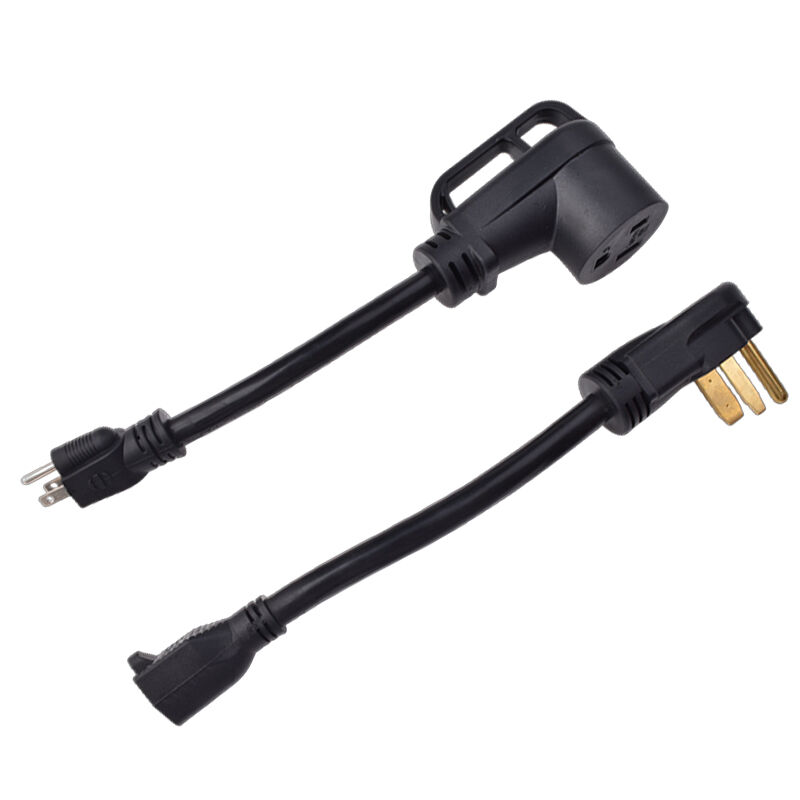
Why Voltage Fluctuations Threaten Computer Hardware
Brownouts, Surges, and Transients: Real-World Power Disturbances
Voltage fluctuations manifest in three primary forms: brownouts (prolonged undervoltage), surges (brief overvoltages), and transients (microsecond to millisecond spikes). Brownouts commonly occur during grid overload—such as peak summer demand from air conditioning—while surges often follow lightning strikes or the startup of large appliances like refrigerators or HVAC systems. Transients arise from nearby equipment switching, including elevators, compressors, or industrial machinery. These disturbances are frequent, unpredictable, and increasingly common in areas with aging infrastructure or homes sharing circuits with high-power devices. Left unmitigated, they cause system instability, data corruption, and accelerated hardware wear—even minor, repeated fluctuations degrade component longevity over time.
Component-Level Impact: How Unstable Power Accelerates Failure in CPUs, PSUs, and SSDs
Computer components respond uniquely—and vulnerably—to inconsistent power delivery. CPUs require tightly regulated voltage for reliable logic operations; transient spikes as brief as nanoseconds can induce calculation errors, lockups, or silent data corruption. Power supply units (PSUs) convert AC to stable DC, but repeated surges stress internal capacitors and rectifiers, degrading filtering performance and efficiency long before outright failure. Solid-state drives (SSDs) rely on precise voltage control during write cycles—fluctuations increase bit errors, trigger excessive wear-leveling, and shorten flash memory lifespan. Over months or years, these cumulative stresses compound, raising the likelihood of premature failure and unplanned downtime. While a well-engineered PC power cable with shielding and integrated surge suppression cannot eliminate all risks, it significantly reduces exposure to avoidable electrical strain on sensitive internals.
Tiantai Cable PC Power Cable: Multi-Layer Surge Protection Explained
Clamping Voltage, Response Time, and Joule Rating — Engineering Metrics That Matter
Effective surge protection hinges on three measurable, interdependent specifications: clamping voltage, response time, and joule rating. Clamping voltage—the threshold at which protective components begin diverting excess energy—determines how much surge energy reaches connected devices. A lower clamping voltage (e.g., ≤330 V) offers tighter protection for modern low-voltage electronics. Response time reflects how quickly the system reacts to a spike; sub-nanosecond MOVs and hybrid gas discharge tubes ensure threats are suppressed before reaching critical circuitry. Joule rating quantifies total absorbable energy—2000 joules, for instance, supports sustained defense against multiple small surges or one major event. Together, these metrics define whether a PC power cable delivers meaningful resilience against everyday fluctuations—or merely cosmetic reassurance. Without balanced performance across all three, even modest brownouts or repeated transients can erode system stability and reliability over time.
Integrated MOVs and Thermal Cutoffs: How the PC Power Cable Self-Protects Under Load
Metal-oxide varistors (MOVs) form the core of most surge-suppressing cables, reacting instantly to transient overvoltages by shifting resistance and shunting excess current. However, MOVs degrade with each surge event, losing clamping effectiveness and potentially overheating. To prevent thermal runaway or fire risk, advanced designs—like those in the Tiantai Cable PC power cable—integrate thermal cutoffs: precision fuses that disconnect the MOV from the circuit once internal temperature exceeds safe thresholds. This self-protection mechanism preserves both user safety and continued functionality of the remaining circuitry. Some models further enhance response speed and energy handling by pairing MOVs with gas discharge tubes (GDTs), creating a staged defense that handles fast, low-energy spikes and slower, high-energy surges in tandem. By embedding this multi-layer architecture directly into the cable, users gain compact, plug-and-play protection—eliminating the need for bulky external suppressors while maintaining consistent power integrity under real-world load conditions.
Beyond Surge Absorption: EMI/RFI Filtering and Stable Power Delivery
Surge protection alone is insufficient for maintaining optimal computer performance. Electromagnetic interference (EMI) and radio frequency interference (RFI)—emanating from Wi-Fi routers, Bluetooth devices, switching power supplies, and nearby motors—introduce high-frequency noise onto power lines. This noise disrupts clean signal transmission, increases error rates in high-speed data buses, and contributes to long-term component fatigue. Unlike surges, EMI/RFI doesn’t cause immediate failure but steadily undermines system fidelity and reliability. Mitigating it requires passive filtering built directly into the power delivery path—not added as an afterthought, but engineered into the cable’s physical construction.
Ferrite Core Design and Shielded Conductors for Clean Power Signaling
High-performance PC power cables integrate two complementary noise-reduction technologies: ferrite cores and shielded conductors. Ferrite beads—toroidal rings clamped around the cable near the connector—act as common-mode chokes, suppressing high-frequency noise traveling equally on live and neutral conductors by converting electromagnetic energy into harmless heat. Simultaneously, braided copper or aluminum shielding beneath the outer jacket forms a Faraday cage, blocking external EMI/RFI from coupling into the conductors and containing internally generated noise from radiating outward. This dual-layer approach ensures the power signal arriving at the PSU remains electromagnetically “quiet,” supporting stable clocking, accurate memory reads/writes, and reduced thermal stress on voltage regulators—all without adding bulk or requiring separate filtering hardware.
PC Power Cable vs. Traditional Surge Protectors: Use Cases and Limitations
PC power cables with integrated surge and EMI protection serve a distinct role compared to traditional plug-in or whole-house surge protectors. They deliver point-of-use defense, focusing protection precisely where it matters most: at the interface between wall outlet and computer. Their compact, integrated design houses MOVs, thermal cutoffs, ferrite cores, and shielding directly within the cable assembly—offering localized mitigation of transients, surges, and high-frequency noise without consuming additional outlets or requiring complex setup. However, their compact form factor limits total energy absorption; most rated models cap at ≤500 joules, making them unsuitable for catastrophic events like direct lightning strikes.
In contrast, plug-in surge protectors provide multi-outlet coverage, typically offering 500–1000+ joules of protection across several devices—ideal for home offices or entertainment centers. Whole-house units, installed at the main electrical panel, intercept surges before they enter branch circuits and offer the highest capacity (≥1000 joules), but require professional installation and still don’t address EMI/RFI or downstream wiring noise.
| Protection Type | Optimal Use Case | Protection Capacity | Limitations |
|---|---|---|---|
| PC Power Cable | Single computer/workstation | Low to moderate (≤500J) | Limited outlet expansion |
| Plug-in Surge Protector | Multiple devices in one location | Moderate (500–1000J) | Outlet-dependent; wear over time |
| Whole-House Surge Protector | Entire electrical system | High (≥1000J) | Requires professional installation |
Critical limitations apply across all categories:
- No PC power cable or plug-in suppressor replaces a whole-house unit for severe external surges.
- None correct brownouts or sags—voltage regulation requires a UPS or line conditioner.
- All surge protection components—including MOVs and GDTs—degrade with use and must be replaced periodically to maintain certified performance levels.
FAQ Section
What are voltage fluctuations, and why are they dangerous for computers?
Voltage fluctuations refer to irregular power delivery, including brownouts, surges, and transients. They can cause system instability, data corruption, and long-term hardware damage if left unaddressed.
How does a PC power cable help protect computer hardware?
A PC power cable with integrated surge protection, EMI/RFI filtering, and shielding mitigates transients, overvoltages, and electromagnetic noise, reducing electrical strain on sensitive components like CPUs, PSUs, and SSDs.
What features should I prioritize in a surge protective power cable?
You should prioritize clamping voltage, response time, and joule rating. These indicate the cable’s ability to handle power spikes effectively, ensuring optimal protection.
How do PC power cables differ from traditional surge protectors?
PC power cables provide localized, point-of-use surge protection, while traditional surge protectors offer broader, multi-outlet coverage. Whole-house surge protectors defend the entire electrical system but require installation by a professional.