 EN
EN

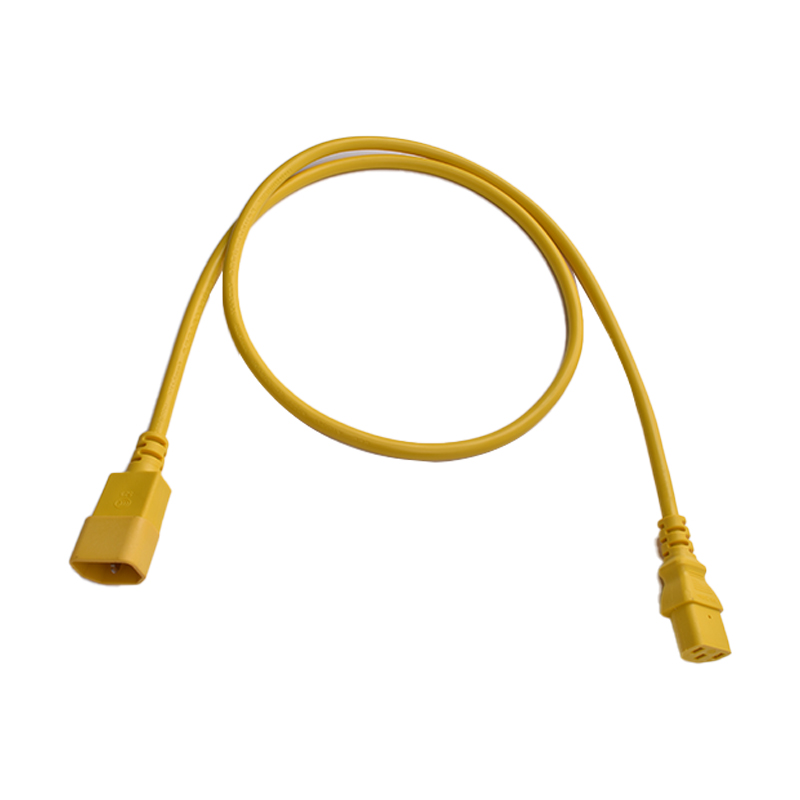
Key Electrical and Mechanical Specifications for C13 Power Cables
The International Electrotechnical Commission 60320 standard defines appliance couplers for connecting power cords to electrical equipment. The C13 and C14 system, comprising a female C13 connector and male C14 inlet, is rated for 10 amperes at 250 volts alternating current, featuring a three-wire, two-pole configuration that includes a protective earth contact. Its polarized design prevents incorrect insertion, while robust mechanical construction supports repeated mating cycles in demanding environments like data centers and server racks.
Thermally, the connector body is rated for continuous operation at 70 degrees Celsius, while internal pin contacts withstand up to 125 degrees Celsius, which is critical for managing high inrush currents without deformation. Insulation materials undergo rigorous dielectric strength and tracking resistance testing to ensure long-term reliability under load. While regional standards such as UL 60320-1 in North America permit certification up to 15 amperes, the international baseline remains 10 amperes, and adherence to this rating is essential for interoperability and safety across global deployments.
Third-Party Certification Versus Self-Declaration
Self-declaration of international compliance carries no independent assurance that a C13 power cable meets its stated electrical, thermal, or mechanical requirements. Without accredited third-party testing, there is no verification that insulation resists breakdown under stress, contacts remain stable at elevated temperatures, or housing retains integrity after repeated use.
Organizations like Underwriters Laboratories, VDE, and TÜV conduct standardized evaluations, including temperature rise, insulation resistance, mechanical endurance, and dielectric strength tests, that routinely uncover performance gaps in self-certified products. Crucially, their certifications generate traceable, publicly searchable records. Buyers can validate certificate numbers against official databases, ensuring transparency and mitigating risks from counterfeit or substandard cables that may overheat or fail catastrophically. Because compliance is mandated in most regulated markets, third-party accreditation is not optional; it serves as the foundational safeguard for safety, liability protection, and supply chain trust.
Verified Compliance and Supporting Evidence
A single certification mark is insufficient evidence of compliance, as true assurance comes from cross-validated verification across multiple accredited bodies. For C13 power cables rated at 10 amperes and 250 volts, the strongest signal of conformity lies in the co-occurrence of UL, VDE, and CE marks, each representing distinct, rigorous assessments aligned to the same core standard.
The UL mark confirms testing to UL 60320-1, a bi-national standard harmonized with the international baseline and recognized across the United States and Canada. The VDE mark reflects independent validation against EN 60320-1, the European adoption of the standard, performed by Germany’s leading nationally recognized testing laboratory. Unlike the self-declared CE mark, which only signifies manufacturer attestation to European Union directives, UL and VDE certifications require laboratory testing and ongoing factory surveillance. When all three marks appear on the same C13 component, they collectively verify that mechanical durability, dielectric strength, and temperature performance have been validated across jurisdictions, creating a defensible, auditable compliance trail.
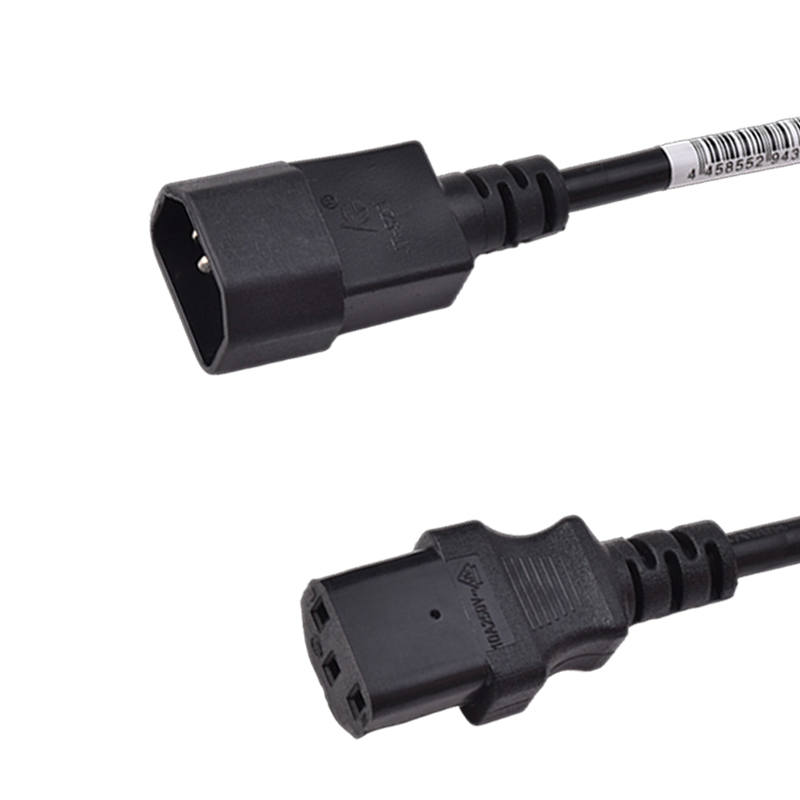
A printed certification mark is only a starting point, as authenticity must be confirmed digitally. Counterfeit labels are increasingly sophisticated, so verification requires direct database lookup. Start by locating the alphanumeric file number adjacent to the mark, where UL listings follow a specific format and VDE certificates display a unique ID. Then, bypass datasheets and perform live searches using UL Product iQ and the official VDE Certificate Database.
The live record must match the supplier’s name and explicitly list the C13 connector, including its rated current of 10 amperes, voltage of 250 volts, and temperature class of 70 to 125 degrees Celsius. This two-minute audit confirms the exact product shipped is the one tested, closing the gap between laboratory validation and real-world deployment, and eliminating uncertified substitutes before they enter critical infrastructure.
Avoiding the IEC Compliant Mislabeling Trap
The term compliant appears frequently in marketing, but without supporting certification marks and verifiable documentation, it signals nothing more than dimensional or material similarity, not verified safety performance. Procurement teams must treat such language as a red flag unless backed by recognized testing laboratory certification.
Genuine compliance demands proof: a recognized mark plus a searchable certificate number covering the full scope, including current rating, temperature tolerance, and mechanical endurance. Cables lacking this evidence risk failing under load, as insulation breakdown, contact overheating, or housing deformation can trigger fire hazards, equipment damage, and regulatory liability, especially in mission-critical environments like data centers. Due diligence is not bureaucratic overhead; it is an operational necessity. Always request full certification documentation and independently verify it against the issuing body’s database. Only then can procurement ensure every C13 power cable delivers the safety, reliability, and interoperability promised by the international standard.
Frequently Asked Questions
-
What is the IEC 60320 standard? The standard is an international specification for appliance couplers, defining electrical, thermal, and mechanical safety requirements for connectors like the C13 and C14 system.
-
Why is third-party certification important for C13 power cables? Third-party certifications, such as UL and VDE, validate performance through rigorous testing and provide traceable records to ensure compliance, safety, and reliability.
-
How can I verify the authenticity of UL or VDE certifications? Certification authenticity can be checked using UL Product iQ or the VDE Certificate Database by searching the unique file number or identification printed on the product.
-
What risks are associated with self-declared compliance? Self-declared compliance lacks independent testing and verification, increasing operational risks such as electrical overheating, insulation failure, and regulatory liability.