 EN
EN

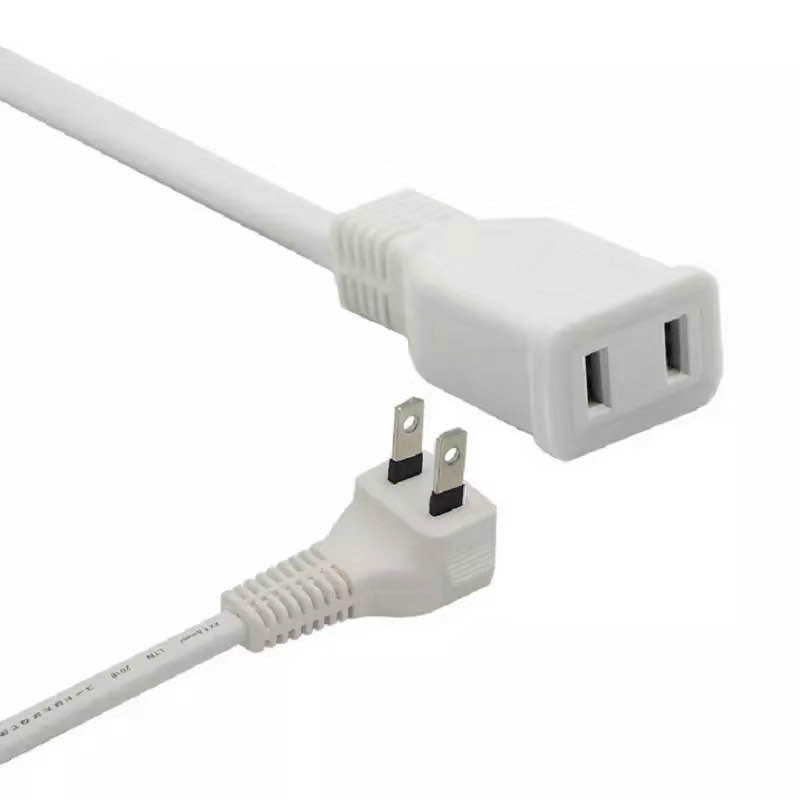
High-Strength Conductor Design for Tensile Performance
The tensile integrity of an extension cord begins with its conductor. High-purity copper, annealed to ASTM B3 standards, delivers a tensile strength of approximately 220 megapascals, providing the foundational mechanical resilience needed to resist stretching and breakage during heavy-duty use. Precision stranding transforms this material into a flexible yet robust core: dozens of fine 30-AWG wires are tightly twisted together to distribute mechanical stress uniformly across the bundle. This dense configuration eliminates internal voids that could otherwise promote inter-strand abrasion when the cord is pulled, bent, or jerked. The result is a conductor that balances high tensile capacity with the flexibility required for repeated coiling and uncoiling, ensuring the electrical pathway remains intact under severe physical strain.
Flex fatigue, the progressive weakening caused by repeated bending, is a leading cause of extension cord failure. Controlling lay length, defined as the axial distance for one full strand helix, and twist geometry directly mitigates this risk. A shorter lay length improves flexibility but can reduce tensile strength, while an excessively long lay length yields stiffness and brittleness. Industry research identifies an optimized lay length ratio of 8 to 12 times the strand diameter as ideal, doubling flex cycle life without sacrificing tensile performance. Additionally, a concentric twist pattern with alternating lay directions between layers neutralizes torsional stress, preventing unwinding under load. This engineered geometry enables the cord to endure thousands of flex cycles while maintaining reliable conductivity in rugged, on-site environments.
Advanced Jacket Materials for Wear and Abrasion Resistance
Thermoplastic polyurethane offers exceptional abrasion resistance and low-temperature flexibility, which are key traits for demanding extension cord applications. Yet pure polyurethane is costly and prone to excessive stiffness without precise formulation. Polyvinyl chloride, by contrast, provides inherent flame retardancy, processability, and cost efficiency, but falls short in wear resistance and ultraviolet stability. A hybrid thermoplastic polyurethane and polyvinyl chloride compound bridges these gaps: the polyurethane component enhances tear resistance and durability, while the polyvinyl chloride improves melt flow, hardness control, and flame performance. Advanced compounding integrates ultraviolet stabilizers and antioxidants to prevent cracking, discoloration, and embrittlement from prolonged sun exposure. By tuning the blend ratio, manufacturers achieve optimal Shore A hardness and flexibility, delivering a jacket that withstands dragging, bending, and abrasion on construction sites and in workshops, all while remaining lightweight and manageable across temperature extremes.
Shore A durometer is a strong indicator, though not the sole determinant, of real-world abrasion resistance. Professional-grade cords typically target 85 to 95 Shore A, striking a balance where surface hardness resists erosion from concrete, metal edges, and gravel without compromising flexibility. Hardness above 98 Shore A risks brittleness and microcracking under repeated flexing. Crucially, abrasion performance also depends on tear strength and elongation at break, which are properties equally critical to longevity. Field testing under standardized abrasion protocols confirms that formulations near 90 Shore A deliver the best compromise, providing sufficient surface resistance to minimize deep cuts and conductor exposure while retaining enough elasticity to coil and uncoil smoothly, even after daily dragging and scraping in harsh job-site conditions.
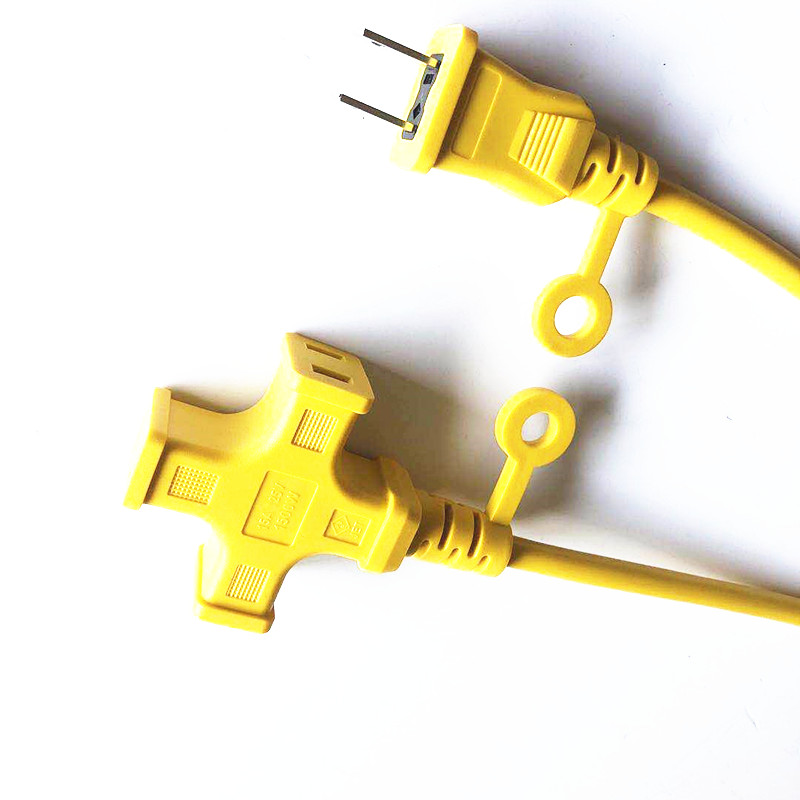
Integrated Construction Architecture Enhancing Extension Cord Durability
Durability is amplified through a purpose-built dual-layer insulation architecture. A polyethylene inner layer provides outstanding dielectric strength, thermal stability, and moisture resistance, effectively shielding conductors from electrical and thermal stress. Over this, a thermoplastic polyurethane outer jacket contributes superior abrasion resistance, flexibility, and environmental resilience. This layered design distributes mechanical loads, including bending, pulling, and twisting, away from the conductors, reducing insulation deformation and conductor fatigue. With a Shore A hardness of 85 to 90 and high tear strength, the polyurethane jacket withstands repeated dragging across rough surfaces without compromising structural or electrical integrity. The synergy between polyethylene’s electrical isolation and polyurethane’s mechanical toughness creates a durable, multi-functional barrier, extending service life in industrial and outdoor settings while resisting ultraviolet degradation, oils, and common chemicals.
The cord’s durability is verified through accelerated life testing that replicates the most extreme job-site conditions. In controlled environmental chambers, samples undergo thermal cycling from minus 40 degrees Celsius to 105 degrees Celsius, 95 percent relative humidity, and intense ultraviolet exposure, simulating years of outdoor service. Mechanical validation includes low-temperature flexing at minus 20 degrees Celsius, dynamic abrasion against sharp concrete edges, and sustained tensile loading. Independent testing confirms the cord endures over 20,000 flex cycles without conductor failure and retains more than 90 percent of its original tensile strength after 1,000 hours of ultraviolet-accelerated weathering. These multi-stressor protocols ensure consistent power delivery and physical integrity, even when subjected to daily abrasion, moisture exposure, and thermal extremes across demanding applications.
Frequently Asked Questions
What is flex fatigue, and why does it impact extension cord performance? Flex fatigue refers to the weakening of materials caused by repeated bending. It impacts extension cords by progressively reducing their mechanical and electrical integrity, leading to failures under continued use.
Why are TPU and PVC combined for jacket materials? Thermoplastic polyurethane provides abrasion resistance and flexibility, while polyvinyl chloride adds flame resistance and cost efficiency. A hybrid jacket maximizes durability while balancing these traits for real-world use.
How do manufacturers test extension cord durability? Durability testing includes thermal cycling, abrasion resistance tests, and sustained tensile loads to simulate years of heavy use and environmental exposure.
What does Shore A hardness signify? Shore A hardness measures the surface hardness of materials. For extension cords, values between 85 and 95 provide a balance between abrasion resistance and flexibility.