 EN
EN

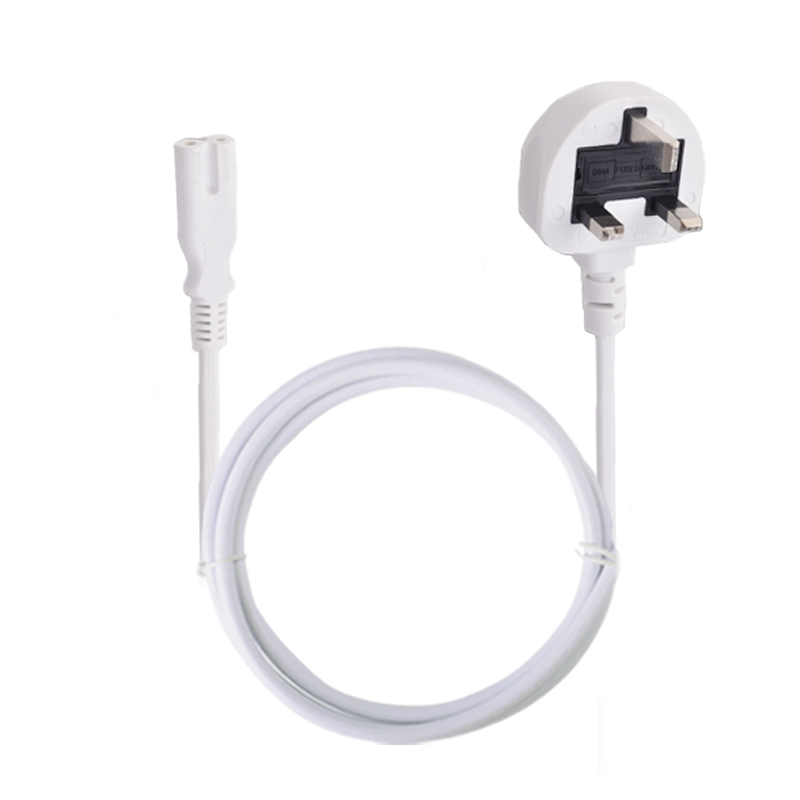
Modular Design: IEC 60320 Inlet Plus Region-Specific Plug End
A core technical advantage in customizing power cords for global markets lies in pairing a standardized IEC 60320 appliance inlet, typically C13 or C19, with a region-specific plug. This modular architecture decouples the device-side interface from the wall-side connection, enabling manufacturers to swap plug ends without redesigning the equipment. The IEC 60320 family provides a polarized, voltage- and frequency-agnostic interface, while the plug end satisfies local mechanical, grounding, and safety requirements, such as Type F Schuko for Germany or Type G BS 1363 for the UK. By standardizing on a single inlet, companies simplify inventory, reduce tooling costs, and ensure full assembly-level certification, avoiding reliance on unqualified adapters that compromise safety and compliance.
A leading medical device manufacturer successfully deployed dual-end power cords using a common IEC 60320 C13 inlet paired with either a Type F or Type G plug. For the Type F variant, engineering focused on robust side-grounding clips and precise cord diameter to engage recessed Euro sockets, while the Type G version integrated a certified 13-ampere BS 1362 fuse and adhered strictly to BS 1363-1 wiring geometry. Both variants used identical cable stock and shared overmolding tooling, maintaining production efficiency. Each cord underwent full dielectric strength and fuse-rating validation per applicable standards, confirming compliance as a complete assembly. The solution eliminated field-installed adapters, reduced return rates linked to improper grounding or fuse failure, and accelerated export logistics, demonstrating that OEM-grade customization is both technically robust and commercially scalable.
Regulatory Compliance and Certification for Custom Power Cord Export
Market access for custom power cords hinges on region-specific certifications, each representing legally enforceable safety and performance benchmarks. Key marks include:
-
UL certification for North America, covering electrical safety under UL 60950-1 and electromagnetic compatibility via Federal Communications Commission rules;
-
CE marking for the European Economic Area, attesting conformity with the Low Voltage Directive and Electromagnetic Compatibility Directive, with ENEC approval widely accepted for cable assemblies as a higher-tier alternative;
-
PSE certification for Japan, where power cords fall under Japan’s Specified Electrical Appliances category, requiring Ministry of Economy, Trade and Industry registration, diamond-mark labeling, and importer-held test reports;
-
RCM marking for Australia and New Zealand, backed by certification to AS/NZS 3112 for plugs and AS/NZS 60320-1 for inlets, with full traceability across cable, connector, and plug components.
All require documented declarations of conformity, technical files, and ready access to test reports. Missing or incomplete documentation triggers customs rejection and exposes importers to product liability claims.
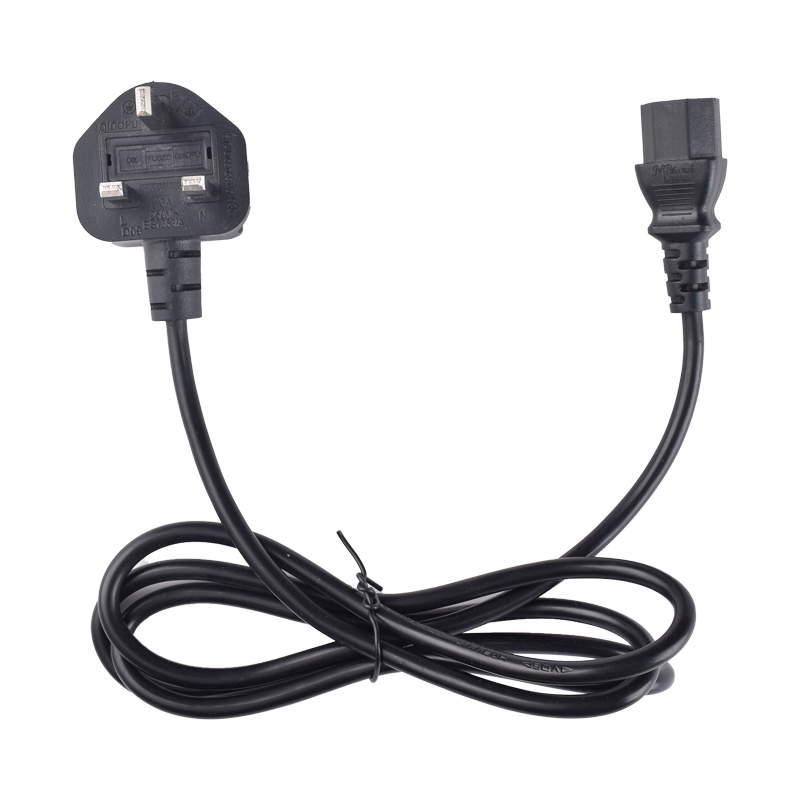
A tiered testing approach maximizes efficiency without compromising compliance. The IEC 60320 inlet is validated once to IEC 60320-1 for dielectric strength, temperature rise, and mechanical integrity, then paired with plug-specific tests aligned to regional standards, such as BS 1363-1 mechanical retention for Type G or VDE 0620-1 grounding continuity for Type F. This avoids redundant retesting of the inlet across markets and consolidates documentation, allowing one base report to support multiple plug configurations. Leading original equipment manufacturers apply this strategy to accelerate time-to-market, reducing agency fees by up to 40 percent and cutting certification lead times by half while preserving full audit readiness.
Key Regional Plug Standards and Their Power Cord Design Implications
Power cord customization demands precise adaptation at the plug end, involving not just pin shape, but grounding method, fusing logic, and mechanical engagement.
-
Type F Schuko uses symmetrical 4.8-millimeter round pins and relies on recessed metal clips for grounding, a non-polarized system requiring flexible strain relief and consistent cord grip to prevent rotation-induced wear.
-
Type G UK enforces polarization via three rectangular pins, featuring a thick earth pin and narrow live and neutral pins, and mandates an integral 13-ampere BS 1362 fuse housed within the plug body, necessitating internal cavity design, fuse holder alignment, and conductor sizing calibrated to fuse rating.
-
AS/NZS 3112 employs two flat, angled live and neutral pins and a longer vertical earth pin, ensuring earth makes contact first and breaks last. Its slanted geometry delivers mechanical locking, reducing pull-out risk and demanding precise mold tolerances and insulation thickness to withstand repeated insertion forces.
These differences directly impact conductor gauge selection, insulation class, overmold hardness, and termination methods, making plug-specific engineering essential rather than optional.
Universal adapters introduce unnecessary interfaces, including loose contacts, added resistance, and thermal hotspots, that undermine safety, reliability, and regulatory compliance. In contrast, a true OEM-customized power cord is engineered as a unified system, matched to the device’s load profile, rated for the target market’s voltage and frequency, and built to meet regional plug standards in full. This eliminates voltage drop, ensures correct conductor sizing for sustained current draw, and integrates critical safety elements—fusing where required, low-impedance grounding paths, and certified strain relief—directly into the assembly. Unlike generic adapters, which rarely carry UL, CE, PSE, or RCM marks, the OEM cord undergoes full-system validation as part of the device’s certification dossier. That integration streamlines compliance, reduces field failures caused by poor contact or overheating, and delivers a compact, durable, and user-intuitive solution. For business-to-business buyers, it means lower total cost of ownership, fewer support escalations, and stronger alignment with end-customer safety expectations, proving that purpose-built customization is foundational to global product integrity.
Frequently Asked Questions
-
What is the IEC 60320 standard? The IEC 60320 is a set of international standards outlining the specifications for appliance connectors, such as inlets and outlets, which are commonly used in electronics to ensure compatibility and safety.
-
Why is modular power cord design significant? Modular design allows manufacturers to pair a standardized inlet like IEC 60320 with region-specific plugs, reducing production complexity and ensuring compliance with local standards without redesigning the entire cord system.
-
How do custom power cords gain market access globally? Custom power cords must meet region-specific certifications like UL for North America, CE for Europe, and PSE for Japan. Compliance with these regulated standards ensures legal, safe, and efficient access to international markets.
-
How are different plugs, like Type F and Type G, adapted in custom cords? Each plug type requires specific engineering to meet its technical and safety standards, such as grounding mechanisms, fuse integration, or pin geometry, ensuring they are safe and functional in their target regions.
-
Why are OEM power cords better than universal adapters? OEM cords are designed to meet exact safety and performance standards for specific devices and markets, eliminating the risks and inefficiencies associated with universal adapters, which often lack proper certification.