 EN
EN

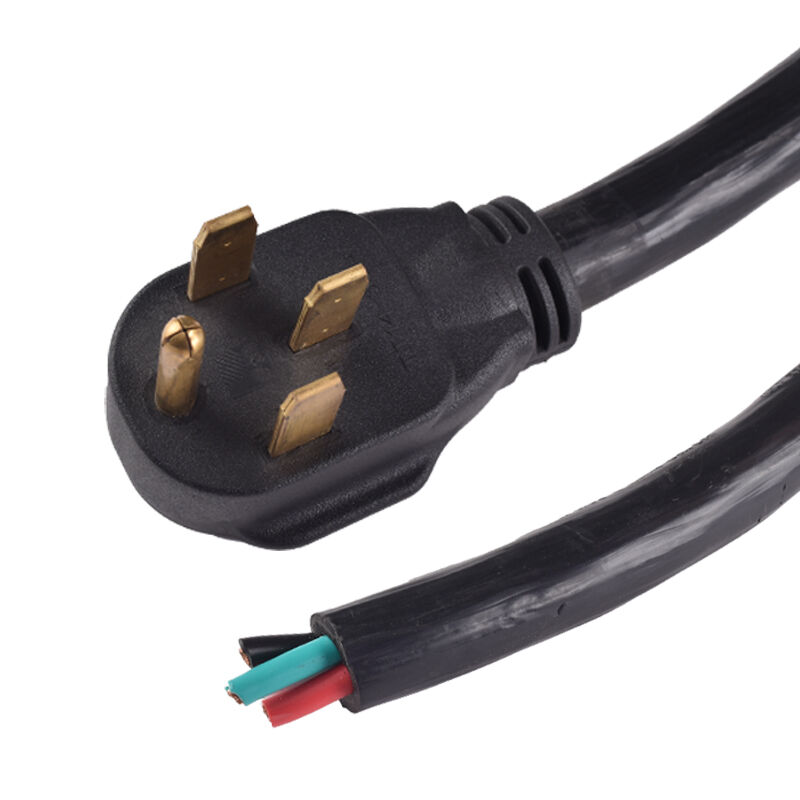
Engineered Power Cables for Renewable Energy Performance
Flexibility, LS0H, EMC Shielding, and Temperature Resilience in Power Cables
Renewable energy installations demand power cables engineered for extreme operational challenges. Flexibility enables efficient routing through tight spaces—such as wind turbine nacelles or solar tracker arrays—cutting installation time by up to 25%. LS0H (Low Smoke Zero Halogen) materials prevent toxic fume release during thermal events, a critical safety requirement in enclosed or densely populated infrastructure. Integrated EMC shielding suppresses electromagnetic interference that can disrupt precision control systems monitoring generation output and grid synchronization. Temperature resilience ensures stable performance across extremes: from desert solar farms exceeding +70°C to Arctic wind sites dropping below –40°C—preventing insulation embrittlement, cracking, or conductivity loss. Collectively, these features reduce unplanned maintenance interventions by 30% compared to standard industrial cables (Renewables Engineering Journal 2023).
Medium Voltage Power Cables (690 V–33 kV) for Efficient Wind Farm and Solar Park Transmission
Medium voltage power cables—operating between 690 V and 33 kV—form the backbone of renewable energy transmission. They enable efficient aggregation of power from distributed sources like solar strings and wind turbines while minimizing resistive losses over long distances. In offshore wind farms, where inter-array and export cables routinely span more than 100 km, optimized conductor sizing and low-dielectric-loss XLPE insulation significantly improve transmission efficiency. Cross-linked polyethylene (XLPE) resists partial discharge degradation, supporting >99% efficiency retention over 25-year design lifespans. This voltage range strikes an optimal balance: high enough to limit current and associated losses, yet low enough to avoid the complexity, cost, and footprint of frequent step-up transformers at individual turbine or string levels.
Power Cables Built to Withstand Extreme New Energy Environments
UV Resistance, Offshore Salt Corrosion, Arctic Cold, and Dynamic Vibration Endurance
New energy environments impose uniquely harsh stresses on power cables—stresses that generic industrial cables cannot reliably withstand. Desert solar farms expose cables to intense ultraviolet radiation, which degrades conventional polymer sheaths within months; purpose-built variants use carbon-black-filled XLPE jackets to block UV penetration and preserve mechanical integrity. Offshore wind platforms face continuous salt spray, wave impact, and marine biofouling—requiring corrosion-resistant conductor alloys and dual-layer sheathing validated under Lloyd’s Register marine durability protocols. In Arctic conditions, temperatures below –40°C threaten insulation brittleness; cold-rated cables employ flexible elastomeric compounds that retain bendability and impact resistance at sub-zero extremes. The most demanding application is dynamic motion—found in floating solar rafts, tidal turbines, and moored offshore wind substations—where cables undergo millions of bending cycles. Leading dynamic subsea cables are tested to over 10 million flex cycles, ensuring 25+ years of uninterrupted service without fatigue-induced failure.
Power Cables That Meet Global Certification and Lifecycle Standards
IEC 61914, Lloyd’s Register, and Regional Compliance (IEC/NEMA/GB) for Project Acceptance
Certification isn’t optional—it’s the gatekeeper to project approval and grid interconnection. IEC 61914 governs cable cleat performance during short-circuit events, preventing catastrophic mechanical failure under fault currents—a non-negotiable for new energy sites with high available fault levels. Lloyd’s Register certification provides independent verification of offshore-specific requirements, including salt corrosion resistance, hydrostatic pressure tolerance, and abrasion resistance for subsea deployment. Regionally, compliance with IEC (Europe), NEMA (North America), and GB (China) standards dictates fire performance, insulation thickness, and environmental resistance—especially LS0H fire safety. LS0H cables reduce toxic smoke emissions by 72% versus standard PVC variants (Ponemon 2023), directly supporting life-safety mandates. Critically, 89% of utility-scale solar parks require IEC 62930 certification for grid interconnection—non-compliant cables risk rejection, rework, and costly delays.
Total Cost of Ownership: Reliability, Service Life, and Reduced Downtime vs. Upfront Savings
Focusing solely on upfront cost misrepresents true value. Premium-engineered power cables deliver a 40-year service life in ground-mounted solar farms—tripling the typical 12–15 year lifespan of budget alternatives. Though initial investment runs 15–20% higher, lifecycle analysis shows average savings of $740,000 per 100 MW wind project (NREL 2023), driven primarily by avoided replacements, reduced labor, and minimized outage penalties. High-reliability designs also mitigate downtime costs: grid-peak outages can exceed $18,000/hour—making 99.9% uptime (vs. 92% for uncertified cables) a decisive economic advantage. Arctic-grade insulation eliminates brittle fracture failures, avoiding emergency winter replacements with associated logistical premiums. When evaluating options, prioritize:
- Reliability metrics: MTBF exceeding 500,000 hours
- Uptime assurance: 99.9% operational availability over 25 years
- Replacement burden: Low-cost cables typically require three or more full replacements within the same period
FAQ
What are LS0H power cables, and why are they important?
LS0H (Low Smoke Zero Halogen) power cables prevent the release of toxic fumes during thermal events, ensuring safety in enclosed or densely populated spaces.
What roles do medium voltage power cables play in renewable energy?
Medium voltage power cables (690 V to 33 kV) efficiently aggregate power from renewable sources like wind turbines and solar panels, minimizing resistive losses over long distances.
How does temperature resilience benefit renewable energy power cables?
Temperature resilience ensures that cables perform reliably in extreme climates, from desert heat (+70°C) to Arctic cold (–40°C), preventing insulation damage and conductivity loss.
What certifications are necessary for renewable energy power cables?
Key certifications include IEC 61914 for short-circuit safety, Lloyd’s Register for offshore environments, and regional standards like IEC, NEMA, and GB for fire safety and environmental resistance.
What factors should be considered for the total cost of ownership of power cables?
While premium cables may have higher initial costs, factors like reliability, service life, reduced maintenance, and downtime savings make them a more cost-effective choice over time.
Table of Contents
- Engineered Power Cables for Renewable Energy Performance
- Power Cables Built to Withstand Extreme New Energy Environments
- Power Cables That Meet Global Certification and Lifecycle Standards
-
FAQ
- What are LS0H power cables, and why are they important?
- What roles do medium voltage power cables play in renewable energy?
- How does temperature resilience benefit renewable energy power cables?
- What certifications are necessary for renewable energy power cables?
- What factors should be considered for the total cost of ownership of power cables?