 EN
EN

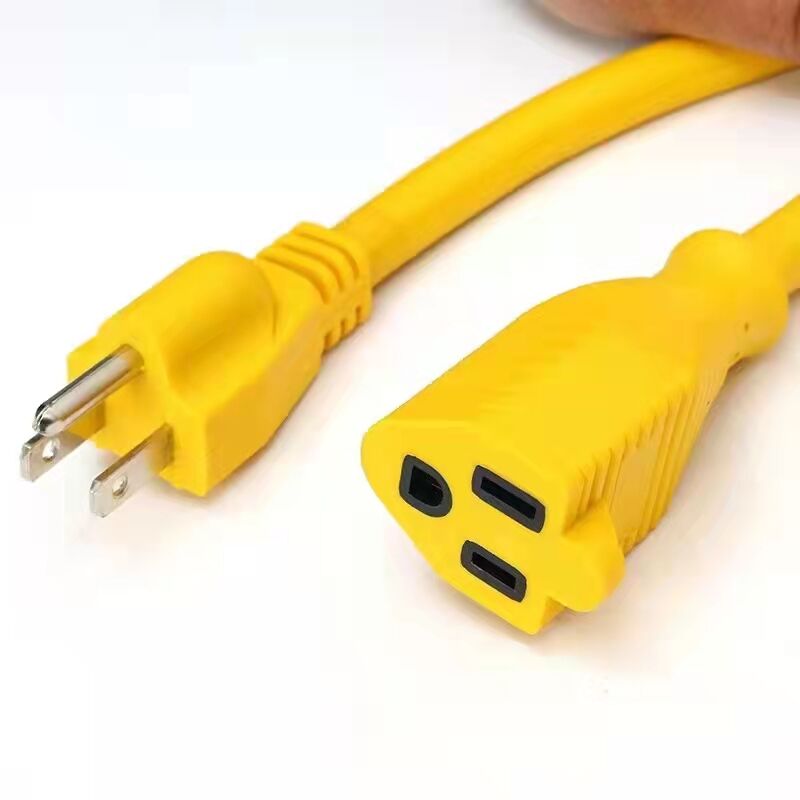
Understanding PDU C19 and C20 Cable Standards for Data Center Reliability
IEC 60320 C19 vs C20: Pin Configuration, Current Rating (16A vs 20A), and Voltage Compatibility (250V)
Under the IEC 60320 standard, the C19 plug and C20 inlet form a matched pair designed for high-power equipment. The C19 connector features a rectangular shroud with three rectangular pins (line, neutral, and ground), while the C20 inlet has a recessed rectangular socket engineered to accept it precisely. Physically larger than the common C13/C14 type, this form factor supports higher current handling and improved thermal performance. Per IEC 60320, the rating is 16A at 250V AC; however, in North America, UL-listed versions of the same connectors are rated up to 20A — reflecting differences in testing methodology and installation conditions. This dual rating makes them ideal for servers, UPS systems, and network switches drawing substantial power. When selecting a PDU C19/C20 cable, matching the connector type to the device inlet and verifying compatibility with local voltage (typically 200–250V) is essential — a mismatch between a 20A-rated cable and a 16A circuit can cause overheating or nuisance tripping.
Critical AWG Selection: Why 12AWG Is Standard for PDU C19 C20 Cables in High-Density Racks
The American Wire Gauge (AWG) directly determines a cable’s ampacity and resistance. For PDU C19/C20 cables operating at 16A or 20A, 12AWG is the industry-standard conductor size. Thinner 14AWG wire would exceed its safe continuous current capacity under full load, increasing heat generation and energy loss. In high-density racks — where multiple high-power devices share a single PDU — voltage drop over longer cable runs also becomes critical. Using 12AWG minimizes resistance, maintains stable voltage delivery to sensitive equipment, and satisfies safety standards like UL 62. This gauge ensures thermal stability, avoids derating penalties, and delivers consistent, reliable power without compromising efficiency.
How Tiantai’s PDU C19 C20 Cables Meet Mission-Critical Infrastructure Requirements
Certification Alignment: UL 62, CSA C22.2 No. 49, and IEC 60320 Compliance for Global Data Centers
Data centers operate globally, so power cords must meet internationally recognized safety and performance benchmarks. Tiantai’s PDU C19/C20 cables comply with UL 62, CSA C22.2 No. 49, and IEC 60320, enabling seamless deployment across North America, Europe, and Asia without regional requalification. UL 62 mandates strict insulation thickness, flame propagation, and flexibility requirements; CSA C22.2 No. 49 adds mechanical endurance and cold-bend performance criteria; and IEC 60320 guarantees precise dimensional and mating compatibility with PDUs, servers, and UPS units from any major manufacturer. Holding all three certifications eliminates compliance risk, simplifies global procurement, and supports audit readiness — a strategic advantage for hyperscale and colocation providers managing complex, multi-jurisdictional infrastructure.
Robust Construction: Strain Relief, Flame-Retardant Jacket (LSZH), and 750+ Bend Cycle Durability
Physical resilience is as vital as certification in dense rack environments. Tiantai’s PDU C19/C20 cables feature reinforced strain relief at both ends to prevent conductor fatigue during repeated plugging, routing, and maintenance. The outer jacket uses a low-smoke, zero-halogen (LSZH) compound — critical for confined server rooms where toxic fumes from combustion pose serious life-safety risks. Each cable exceeds 750 bend cycles (per UL 62 test protocols) without cracking, insulation breach, or conductor exposure. Combined with 12AWG conductors optimized for 16A continuous operation, this construction supports thermal derating and maintains bundle integrity even at sustained high power densities. The result is extended service life, fewer unplanned replacements, and dependable 24/7 operation in mission-critical facilities.
Real-World Deployment Advantages of Tiantai PDU C19 C20 Cables in Enterprise Environments
Thermal Derating & Load Balancing: Why IT Teams Choose C20 Cords on 16A PDUs Without Compromising Safety
In high-density deployments, ambient temperature and airflow constraints often necessitate thermal derating of PDUs — reducing their effective capacity below nameplate ratings. Tiantai’s 12AWG C19/C20 cables provide significant thermal headroom, allowing IT teams to safely operate 16A PDUs near capacity without exceeding temperature thresholds. Their low-resistance conductors minimize heat buildup, supporting balanced phase loading and stable voltage delivery across densely packed racks. The C20’s locking design further enhances reliability by preventing accidental disconnection during routine maintenance or vibration-prone operations. This combination — proper gauge sizing, robust termination, and secure mating — ensures full compliance with UL and CSA safety requirements, even under sustained thermal stress.
Seamless Compatibility: Server, Switch, and UPS Integration — Including C20-to-C19 Adapters and Legacy Outlet Bridging
Tiantai PDU C19/C20 cables deliver native interoperability across modern enterprise infrastructure. They are engineered for direct use with C20 inlets on PDUs and C19 outlets on blade servers, core switches, and modular UPS systems — eliminating adapters in new deployments. For legacy environments with C13 or C14 outlets, Tiantai offers certified C20-to-C19 adapters, enabling older hardware to connect safely to 16A PDUs without rewiring or infrastructure upgrades. The LSZH jacket and reinforced strain relief ensure reliable performance in tight, congested spaces, while the 750+ bend cycle durability guarantees long-term integrity. This plug-and-play compatibility accelerates deployment, reduces configuration errors, and simplifies lifecycle management across heterogeneous, multi-vendor data center environments.
FAQs
What is the difference between a C19 and C20 connector?
A C19 plug features three rectangular pins (line, neutral, and ground), while a C20 inlet is a recessed rectangular socket designed to accept it. Together, they are used for high-power equipment in data centers.
What is the current and voltage rating for C19 and C20 connectors?
Under the IEC 60320 standard, C19 and C20 connectors are rated for 16A at 250V AC. In North America, UL-listed versions of these connectors have a higher rating of up to 20A.
Why is 12AWG wire used for PDU C19/C20 cables?
12AWG wire provides a higher ampacity, ensuring safe continuous operation at 16A or 20A. It minimizes heat generation, voltage drop, and energy losses in high-density rack environments.
Are Tiantai PDU C19/C20 cables globally certified?
Yes, Tiantai cables adhere to UL 62, CSA C22.2 No. 49, and IEC 60320 standards, making them compliant for use in North America, Europe, and Asia.
What makes Tiantai C19/C20 cables durable?
These cables feature strain relief at both ends, a low-smoke zero-halogen (LSZH) outer jacket, and exceed 750 bend cycles for long-lasting performance in high-density environments.