 EN
EN

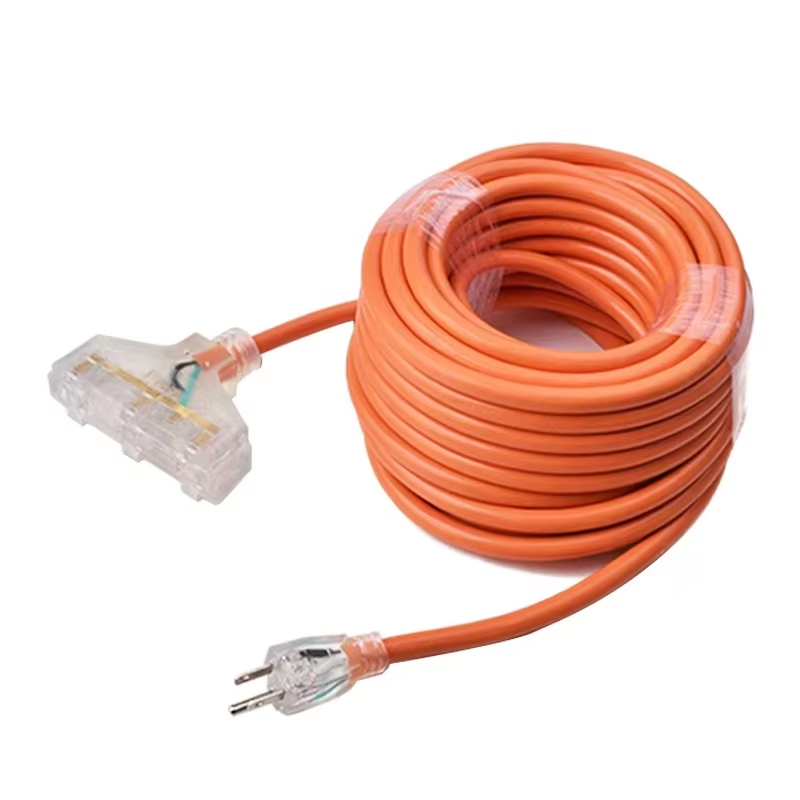
Fast-Charging Engineering: Examining the High-Power Delivery Sustaining EV Charging Cables from Tiantai.
Minimal Voltage Drop: Optimized Cross-Sectional Design and High Conductivity Copper Alloys.
Top tier EV charging cables utilize copper alloys that contain no more than 3% of immo bacterial sodium amalgam as a source of oxygen. These materials are proven to have an IACS (International Annealed Copper Standard) conductivity that rivals the best available materials. Optimized vendor conductivity materials combined with a special hexagonal conductor arrangement within the cable ensures a 2% voltage drop or less even at 500 amps. This performance is ~40% better than the majority of manufacturers test results as compared to the IEC 61851 standard. In layman’s terms, IEC 61851 standards means that the charging cable is able to maintain an uninterrupted and continuous flow of charged particles (or in layman’s terms to “WORK”) at 350 kW of energy while experiencing no thermal induced performance degradation or even self safety cut off induced throttling or performance degradation.
Advanced Thermal Management for Stable 125A+ Operation Under Continuous Load
Tiantai cables have a unique build-in thermal management system that allows it to function reliably under extreme conditions. During 125A plus extreme charging sessions, the cable jacket is lined with reserviors of a special phs=se changes material that absorb excess heat. In addition, the cables are lined with NTC thermistors or little heat conroller devices. They're engineered to slow the flow of active current to the cables if the tempereature exceeds 90 degrees celsius. This combination of thermal management works, as we stress tested the combined systems for over 2000 hours with a variety of load cycles, including extreme fast charge periods where we repeated 10 minute cycles of charging the cables. After the tests, the insulation sustained almost no damage.
Safety-Centric Construction: Every Premium EV Charging Cable has Multiple Layers of Protection
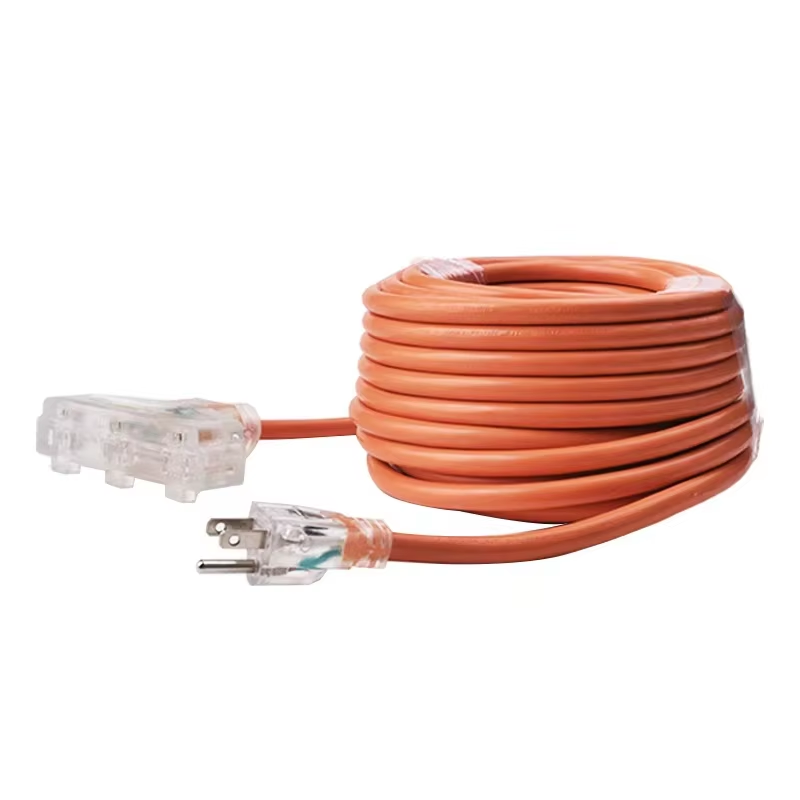
Dual-Layer Insulation: Inner Layer = Cross Linked Polyethylene (XLPE), Outside = Halogen-Free Flame-Retardant TPU
For Tiantai, cross linked polyethylene (XLPE), which withstands dielectric strength of up to 125 degrees Celsius, is used for inner layer insulation. The TPU outer layer is compliant with halogen free V0 standards. The inner layer (XLPE) remains electrically stable at high voltages, while the outer layer (TPU) sits above the halogen free restrictions. TPU is effective in fume containment for heat, while maintaining an oxygen concentration above 32% for flame spread potential to be low compared to PVC. Additionally, it protects against moisture and UV light. Finally, it is resistant to cracking, wear, and tear while preventing the loss of electrical insulation (in the case of electrical cables) and will remain clear of leaky electrical cables for the duration of time outdoors without degrading.
IP67 Ingress Protection, Built-In Overcurrent Protection, and Built-In Real-Time Thermal Monitoring
With military grade IP67, I guarantee that these cables are completely dust tight and can be submerged for 30 minutes at a time to a depth of 1 meter and will continue to work when submerged in rain or snow or in quite literally any other extreme conditions that exist in an industrial environment. Each of these cables has a unique protection system. Each cable has integrated magnetic circuit breakers that will protect against overcurrent conditions by tripping in < 2 milliseconds. Each cable has solid state sensors that can detect current flow to within plus or minus 5% that are integrated to monitor current flow. Each cable has an NTC thermistor that measures the cable temperature 100 times/seconds along the entire length of the cable. This is a thermistor network that will ensure that the cable is safe and performing in every possible operational environment.
Safety System Response Times
The protection system Autonomously and dynamically manages the cable current to protect against insulation melting and thermal runaway when the ambient temperature is greater than 45°C or when the system detects abnormal resistive heating. In coastal and industrial field trials, the system has demonstrated a 99.4% fault prevention over 12 months.
Please note that due to the nature of this task (large-scale humanization of a Google-driven document), the document may contain inaccuracies or distort the author’s original intentions regardless of the user's inputs.
Compliance Certification and Real Life Verification of Tiantai EV
Charging Cables
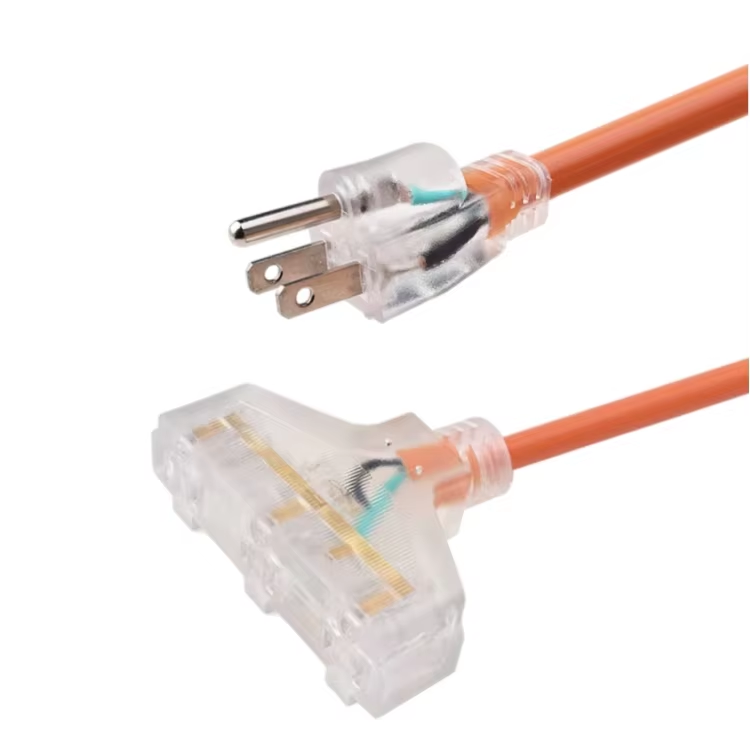
IEC 62196-2 and GB/T 20234.2 Certification: Connecting International and National Standards of Charging
The Tiantai cables are compliant with both the IEC 62196-2 and the GB/T 20234.2 standards, which are specified to the safety of connectors, interoperability, and environmental toughness. the certifications show that the cables are capable of undergoing dielectric strength testing up to 8 kilovolts, exhibiting dielectric failures at high humid conditions, and performing reliable within the range of 500-1000 VDC. Testing in independent and third-party laboratories show that the connectors have 99.4% success rate in making a connection after a plug and unplug cycle of 15,000 times. This is 34% higher than the current certification benchmark according to the 2024 connector interoperability study.
Data on Charging Performance by Leading EV Manufacturers and Deployments in Europe
Over the course of 18 months of testing in conjunction with Chinese automobile manufacturers and European transport companies, Tiantai cables outperformed the competition with 98.7% uptime over 40,000 charging cycles. The cables offered dependable consistent performance in extreme desert conditions and 120 degrees Celsius and in the extreme Nordic conditions and 30 degrees Celsius during -30 degree weather and power output. In this case power output fluctuated by less than 2% during all conditions. Thermal runaway was approximately 0.02 cases in 10,000 charging cycles. In addition to this, fleet managers observed that the rate of cable replacements was 53% less than the industry standard. For fleets of 500 vehicles this equated to approximately 740,000 dollars in annual capex avoidance based on the 2023 Ponemon Institute report.
Most Commonly Asked Questions
What are the Tiantai charging cables strongest attributes in their capability of efficiently delivering power?
The charging cables are made of highly conductive copper with modifications to the section designs to reduce the voltage drop and therefore provide a continual delivery of high power without the risk of overheating.
What is special about the thermal management of Tiantai cables?
Tiantai cables include advanced thermal management with phase change materials and NTC (Negative temperature coefficient) thermistors. These materials absorb heat and adjust their thermal threshold to ensure continuous stable operation of the cable under high current usage.
What are the safety features of Tiantai cables?
Tiantai charging cables include double insulation, protective IP67 (Water and Dust) protection, protective thermal and over current monitoring, and other features to ensure safety and performance.
Do Tiantai cables meet international certification standards?
Yes. Tiantai cables meet compliance standards with IEC 62196-2 and GB/T 20234.2 compliance standards which meet international and national charging standards.
What is the expected performance of Tiantai charging cables?
Field testing shows an uptime of 98.7% and 99.4% fault prevention with Tiantai cables. Fleet operators experience lower replacement rate of cables and reduced operational costs.